


Understanding Plant Groups
With so many aquarium plants available at our fingertips, choosing the right ones can sometimes feel tricky or even a little daunting. It’s both a blessing and a curse – we’re truly spoilt for choice. This quick introductory guide breaks down the main groups and types of aquatic plants to help make that choice easier.
Aquarium plants can be broadly grouped by how they grow, how they are planted, and how they are used in aquascaping. Knowing these groups makes plant selection, layout planning, and long-term maintenance much easier.
The three most common and useful groups are stem plants, epiphytes, and rosette plants.
Stem Plants
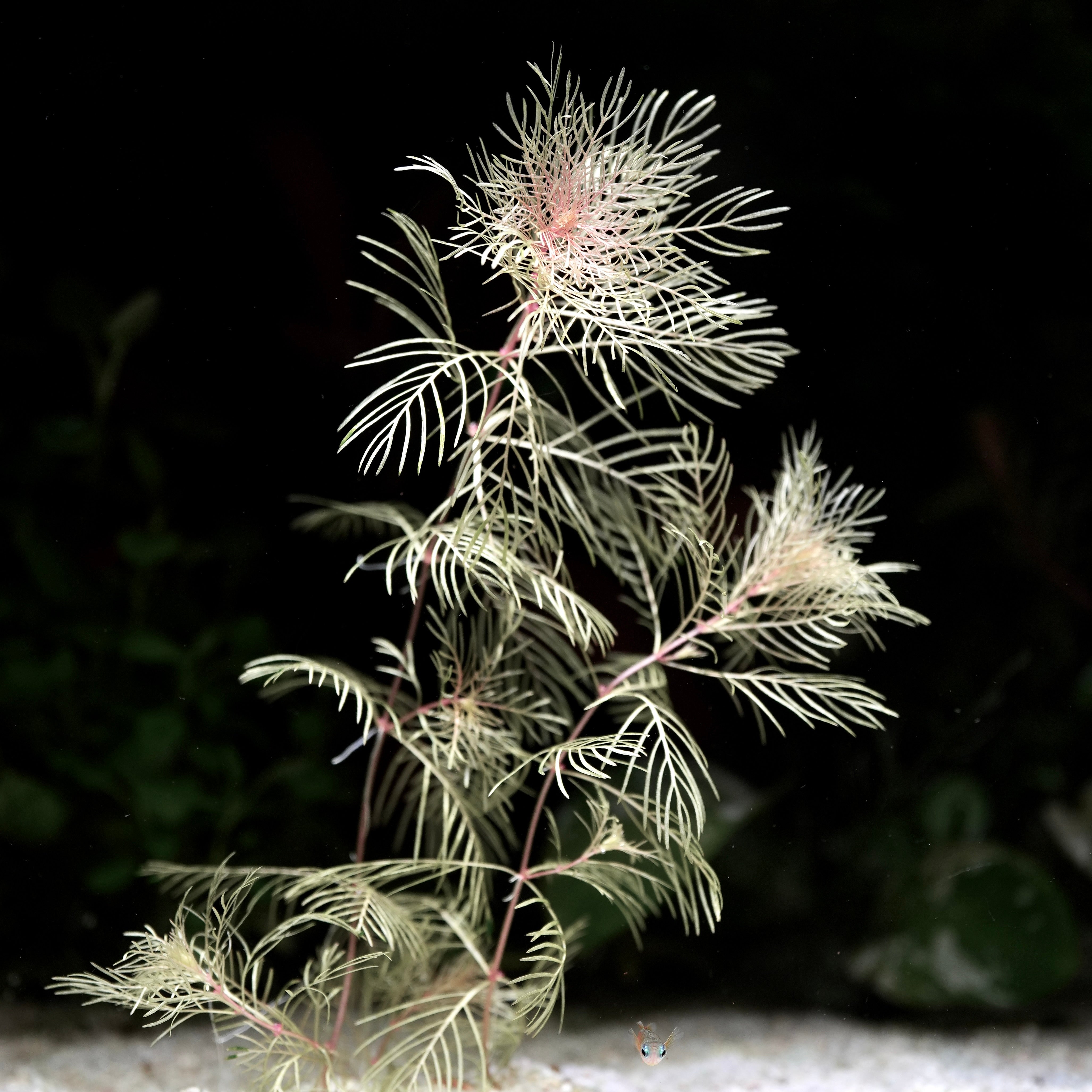
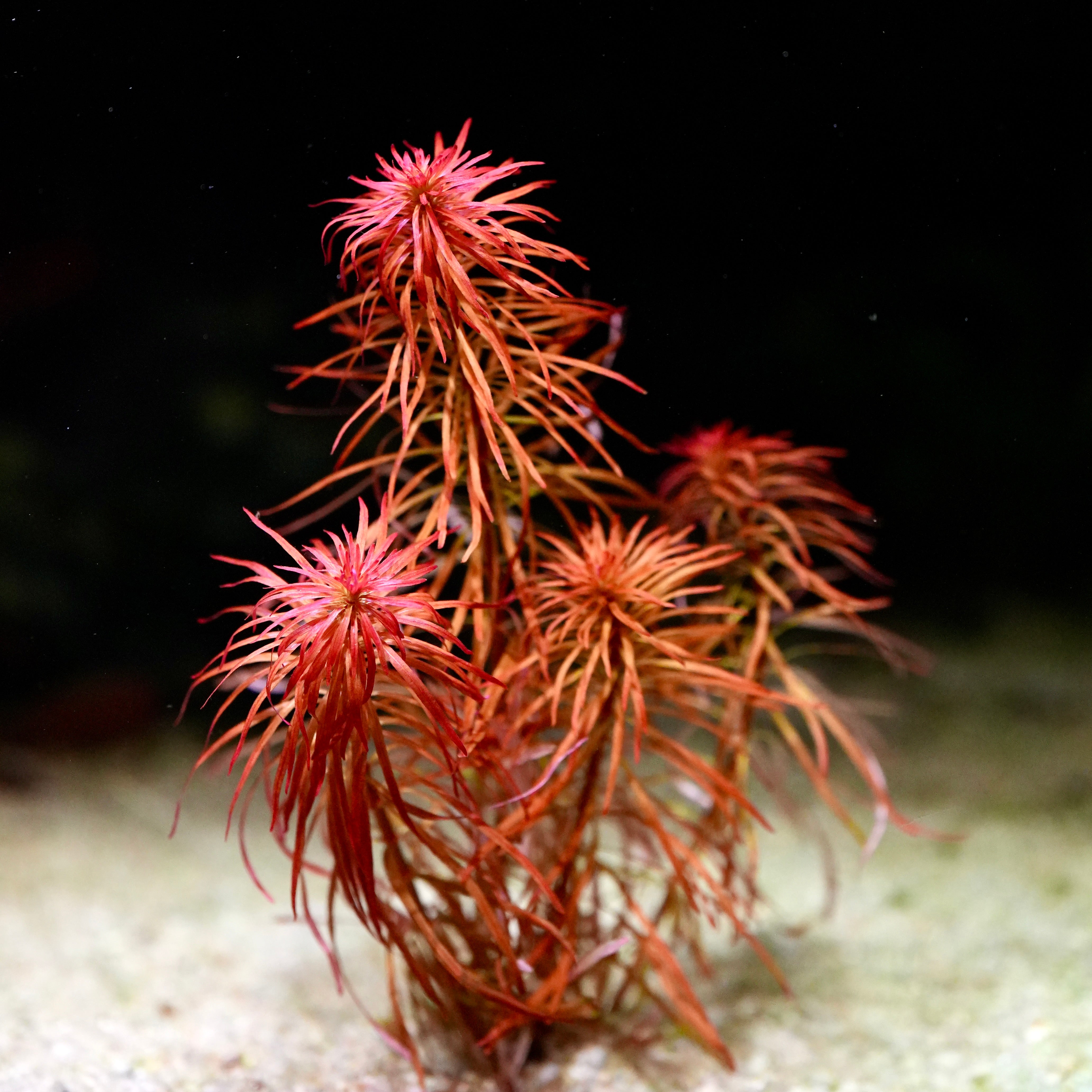
Stem plants grow vertically from a single stem and are typically planted directly into the substrate. They absorb most nutrients from the water column and are known for fast growth and easy propagation.
Key Characteristics
- Upright, vertical growth
- Fast to moderate growth rate
- Easy to propagate by cutting and replanting
- Excellent for background and midground planting
- Ideal for nutrient export and algae control
Common Stem Plant Genera
- Rotala – Fine leaves, compact growth, excellent colour under strong light
- Ludwigia – Broad leaves with red, orange, or bronze tones
- Limnophila – Aromatic, soft-textured stems with feathery foliage
- Alternanthera – Deep reds and purples, slower but very vivid
- Bacopa – Thick stems, round leaves, very beginner-friendly
- Myriophyllum – Fine, feathery leaves with a soft, flowing look
Best Use in Aquascaping
Stem plants are the backbone of Dutch-style layouts, jungle tanks, and fast-growing planted aquariums. Regular trimming encourages bushier growth and keeps them compact.


Epiphyte Plants
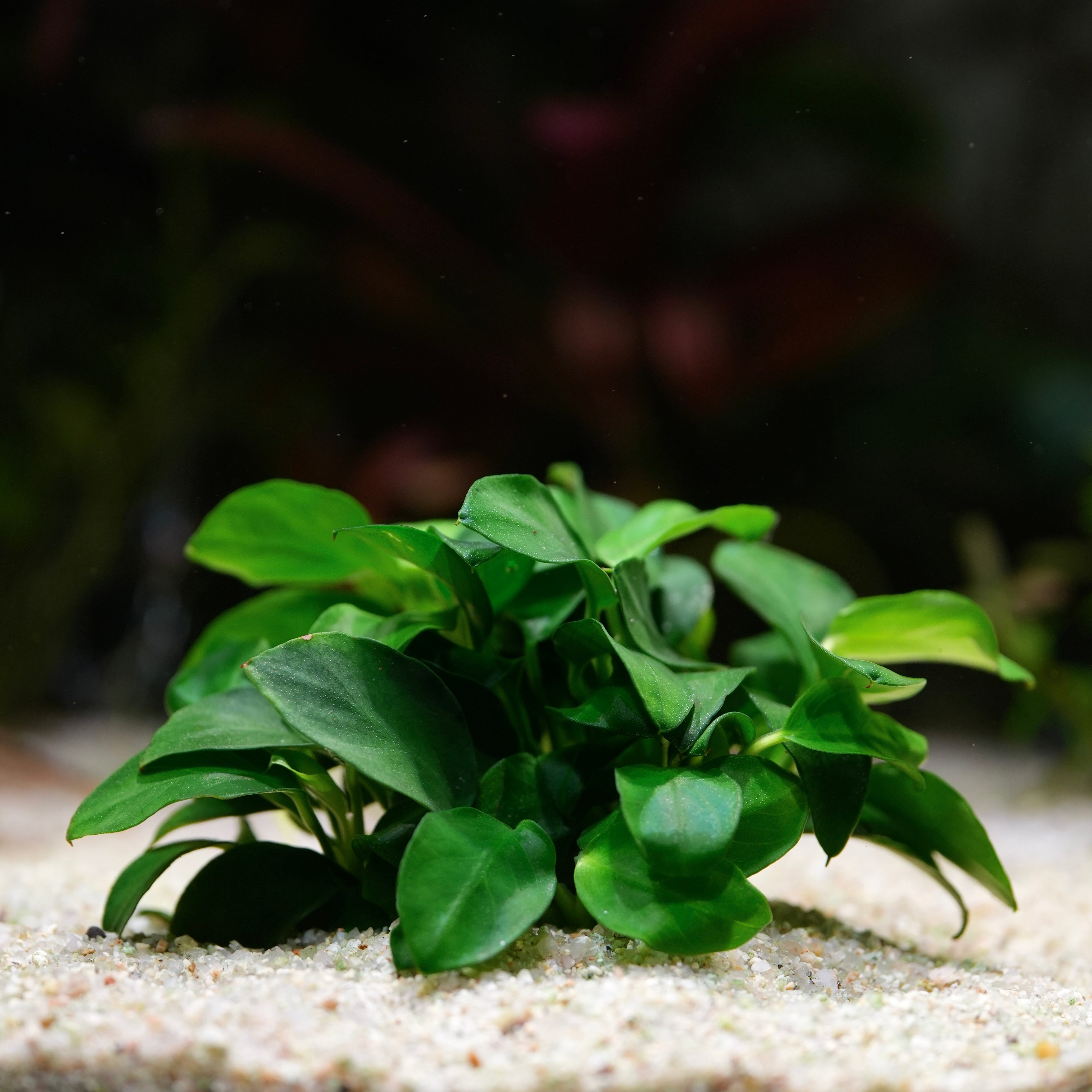
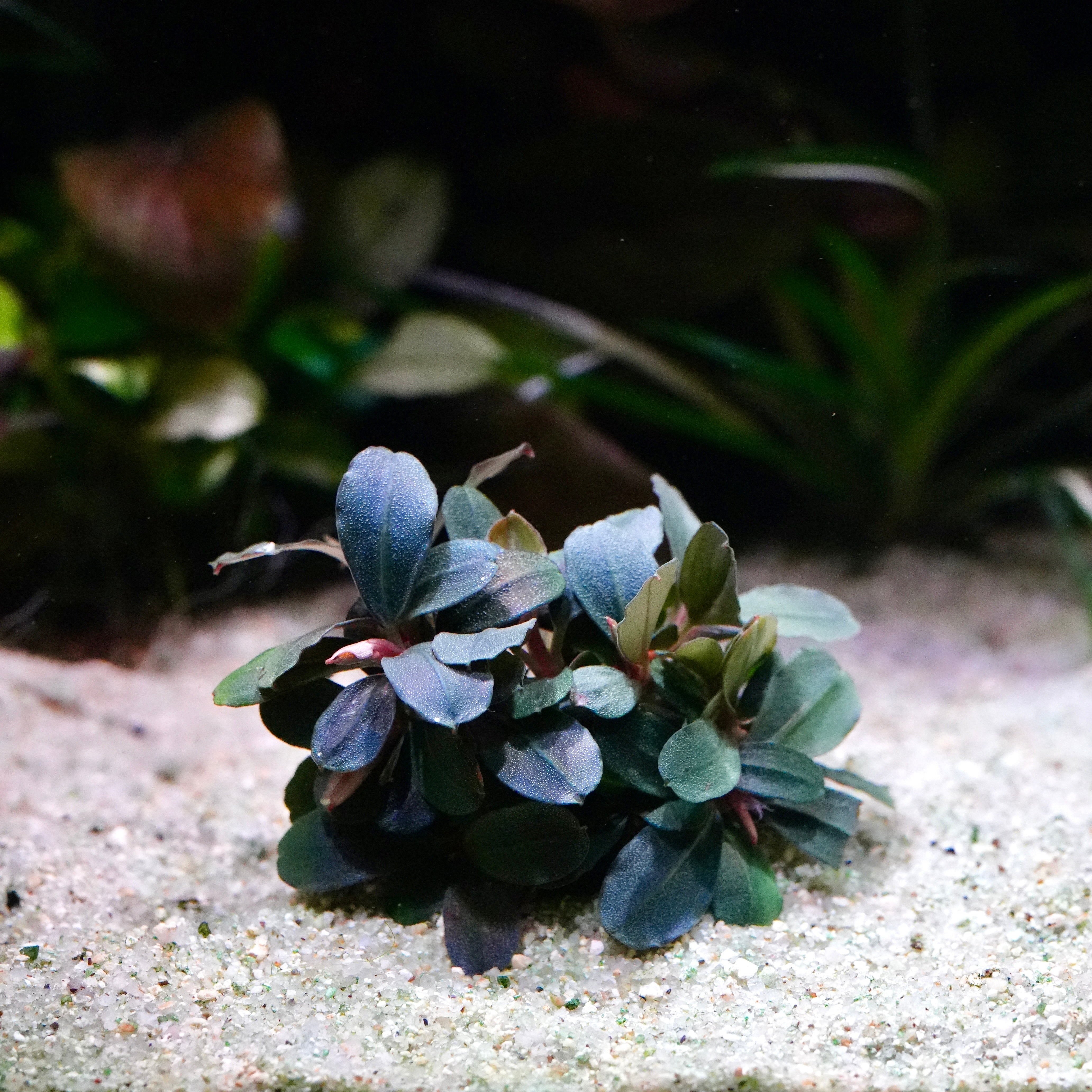
Epiphytes grow attached to hardscape rather than planted into substrate. They have a rhizome or horizontal structure that stores nutrients.
Key Characteristics
- Hardy plant, and easy to grow
- Can be attached to rocks or driftwood
- Slow to moderate growth
- Very stable and low maintenance
- Excellent for low light (low-tech) aquariums
- Ideal for shaded or low-light areas
Common Epiphyte Genera
- Anubias – Extremely hardy, broad leaves, great for beginners
- Bucephalandra – Compact leaves with metallic and iridescent tones
- Microsorum (Java Fern) – Long narrow leafy, and grows new plants
- Bolbitis – Fern-like, delicate leaves with a natural look
- Mosses – Versatile plants for wood, rocks, and carpets
Best Use in Aquascaping
Epiphytes are perfect for nature aquariums, iwagumi accents, shrimp tanks, and low-maintenance setups. They add texture and detail without heavy trimming requirements.


Rosette Plants
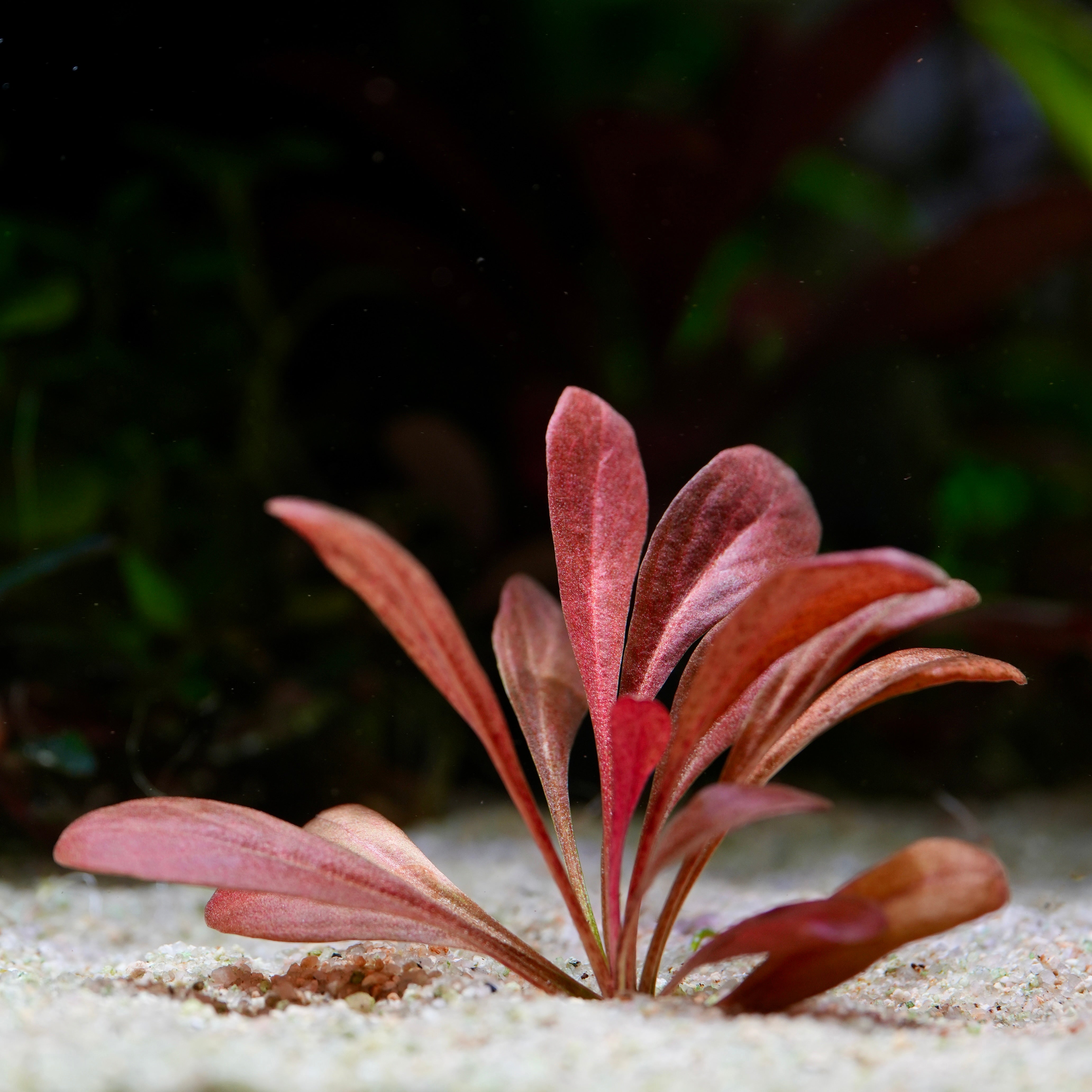
Rosette plants grow from a central crown with leaves radiating outward. They are primarily root feeders and benefit from nutrient-rich substrates or root tabs.
Key Characteristics
- Leaves grow from a central base
- Strong root systems
- Slower, steady growth
- Some are sensitive to changes during planting
- Excellent focal or structural plants
Common Rosette Plant Genera
- Echinodorus – Large, bold leaves, easy to grow
- Cryptocoryne – Huge variety of leaf shapes and colours
- Eriocaulon – Grass-like and unique plants for advanced setups
- Blyxa – Soft, flowing leaves with bush-like growth
Best Use in Aquascaping
Rosette plants work beautifully as midground anchors, foreground clusters, or centre-stage specimens. They add weight and structure to layouts and contrast well with fine-leaf stem plants.



Final Thoughts
A well-balanced planted aquarium will often include all three plant groups, but this guide is intended only as a starting point and by no means needs to be followed strictly. Aquarium plants are far more flexible than they’re often given credit for, and there’s plenty of room to be creative in how you grow and display them.
Use these groups as a foundation for understanding plant behaviour and growth habits, then experiment and adapt to suit your own style. With this basic knowledge, plant selection becomes easier and layouts tend to develop into healthier, more natural-looking aquascapes.