

How to Grow Aquatic Plants
Aquatic plants transform your aquarium from a simple fish tank into a thriving underwater ecosystem. This guide will help beginners understand how to successfully grow healthy aquarium plants, building on the basics of setting up a planted tank.
Contents
- Understanding Plant Essentials
- Lighting and Equipment
- Substrate and Fertilisation
- CO2 Supplementation
- Plant Selection for Beginners
- Planting Techniques
- Maintenance and Troubleshooting
Understanding Plant Essentials
Like all plants, aquatic species need several key elements to thrive:
The Aquatic Plant Triangle
For successful plant growth, balance these three core elements:
- Light
- Carbon
- Nutrients
Key concept: If you increase one element (like light), you'll need to increase the others proportionally to maintain balance.
Plant Forms
Aquarium plants fall into several categories based on their natural forms:
- Emersed vs. Submersed Growth: Many aquarium plants can grow both above and below water, but often look different in each form.
- Root Feeders vs. Water Column Feeders: Some plants take nutrients primarily through roots, others through leaves.
- High-Tech vs. Low-Tech Requirements: Some plants need high light and CO2, while others thrive in simpler setups.
Lighting for Plant Growth
Light drives photosynthesis and is one of the most important factors for plant health. The key measure is PAR (Photosynthetically Active Radiation), which shows how much usable light reaches your plants.
Light Intensity
- Low light plants: 5 - 30 PAR
- Medium light plants: 30 - 70 PAR
- High light plants: 70+ PAR
Pro tip: All of our LED lights designed for planted tanks will provide adequate light for all species. No need to worry about which light is suitable for which plant - we’ve taken care of that for you.
Light Duration
- Start with 5 - 7 hours daily.
- Use a timer for consistency.
- Gradually increase to 7 - 9 hours if plants are healthy.
Colour Temperature
Daylight LEDs (6500–7000K) work well, but RGB lights offer a richer spectrum—enhancing plant growth while making greens, reds and blues brighter and more vivid.
Substrate Options
Nutrient-Rich Substrates
- Aqua soil: Complete solution with nutrients and ideal texture (Tropica Aquarium Soil, Netlea Master Soil, ADA Amazonia).
- Advantages: Encourages robust root growth, buffers water chemistry, contains nutrients.
- Considerations: Can lower pH and soften water, may deplete after 1 - 2 years.
Inert Substrates
- Sand: Fine texture, good for delicate root systems.
- Gravel: Various sizes available.
- Advantages: Doesn't affect water chemistry, doesn't break down over time.
- Considerations: No inherent nutrients, may need regular root tab fertilisation.
Pro-tip: Start with aqua soil for the easiest success with plants, especially if you're keeping root-feeding species.
Fertilisation Basics
Macronutrients (needed in larger amounts)
- Nitrogen (N): For leaf and stem growth.
- Phosphorus (P): For root development.
- Potassium (K): For overall plant health and disease resistance.
Micronutrients (needed in trace amounts)
Plants also need a wide range of other minerals and elements which serve a multitude of purposes including photosynthesis, production of enzymes, hormones including:
- Iron, manganese, copper, zinc, boron, molybdenum etc.
Fertilisation Methods
- Root tabs: Inserted into substrate near root-feeding plants.
- Liquid fertilisers: Dosed directly into water column.
- All-in-one solutions: Contain both macro and micronutrients (2hr Aquarist APT, Tropica Specialised, Masterline).
Pro-tip: Start with an all-in-one liquid fertiliser following package instructions, and use root tabs for heavy root feeders.


CO2 Supplementation
The Role of CO2
Carbon dioxide is one of the most overlooked factors in plant growth, and it’s often the reason hobbyists struggle with certain species. While some plants can grow without supplemental CO2, all plants benefit significantly from it—and for more demanding species, it’s absolutely essential.
Pressurised CO2 Systems
- Components: CO2 cylinder, regulator, bubble counter, diffuser/reactor.
- Advantages: Precise control, consistent levels, most effective method.
- Considerations: Higher initial cost, requires monitoring to avoid fish stress.
DIY CO2 Systems
- DIY systems: Homemade setup using citric acid and baking soda, or yeast and sugar.
- Advantages: Low set up costs, readily available.
- Considerations: Low CO2 output, inconsistent at low pressure, more maintenance, requires monitoring.
For beginners, you can successfully grow many plants without added CO2. Consider starting without it and adding a system later if you want to grow more demanding plants.
Plant Selection for Beginners
Least Demanding Plants for Beginners
Epiphytes (attach to hardscape)
- Anubias: Nana, Petite, Barteri, Coffeefolia.
- Bucephalandra: Various leaf shapes and colours.
- Java Fern: Regular, Windelov, Narrow leaf, Trident.
- Mosses: Java moss, Christmas moss, Flame moss.
Root Feeders
- Cryptocoryne: Wendtii, Beckettii, Undulata.
- Amazon Sword (Echinodorus): Classic centerpiece plant.
- Vallisneria: Tall, grass-like background plant.
Stem Plants
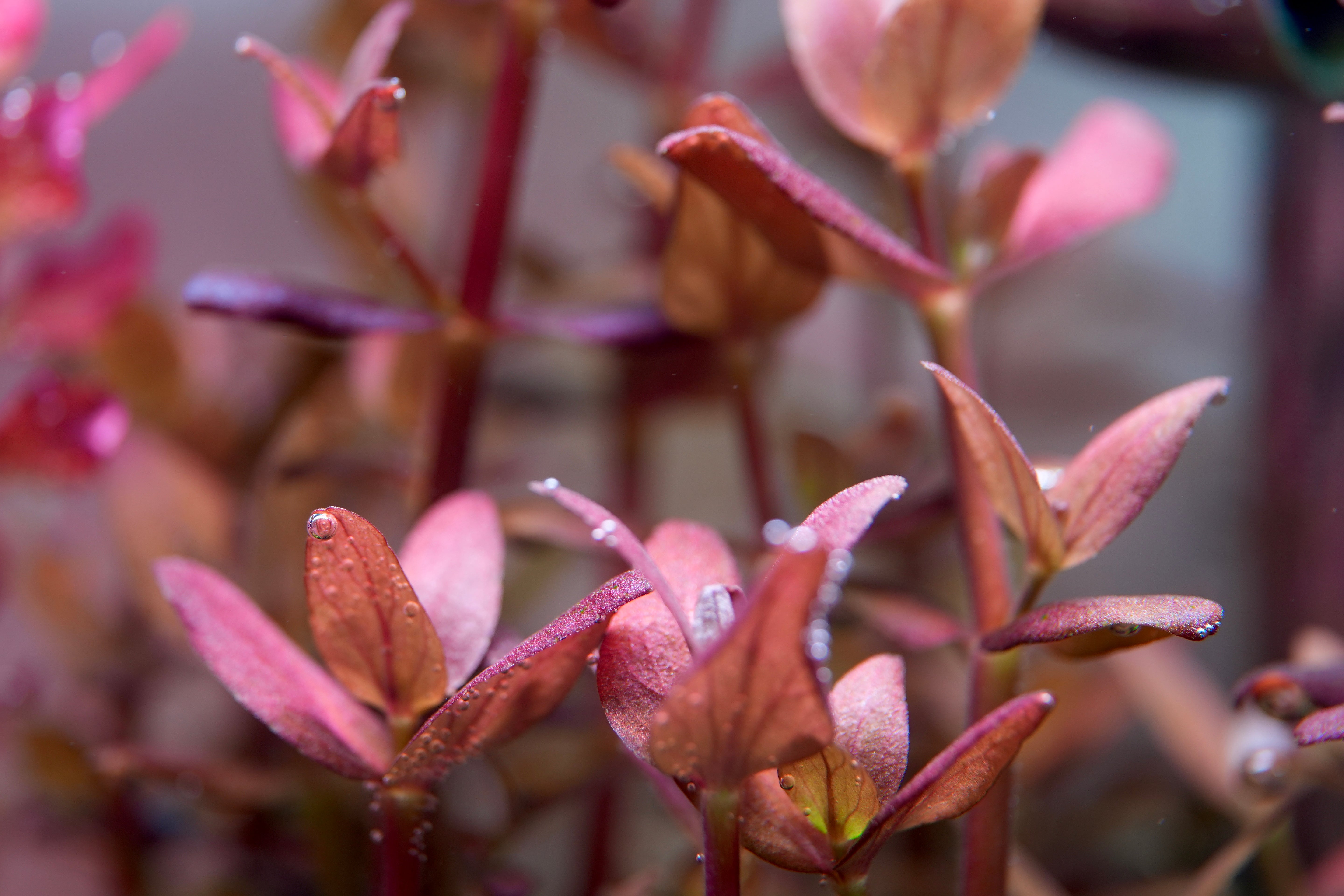
- Rotala: Pink to red coloration with adequate light.
- Bacopa: Compact, round-leafed stems.
- Hygrophila: Fast-growing, forgiving stem plant.
- Limnophila: Very fast-growing and easy to propagate.
Understanding Plant Categories by Position
Foreground Plants (0 - 10cm)
- Create "carpets" and ground cover.
- Many require higher light and CO2 (except Anubias nana 'Petite' and some mosses)
Midground Plants (10 - 20cm)
- Create visual transitions and focal points.
- Good variety available for low-tech tanks.
Background Plants (20 - 30+cm)
- Provide height and hiding places.
- Many tall stem plants and rosette plants work well here.
Floating Plants
- Provide shade and surface interest
- Excellent for reducing nitrates
- Examples: Frogbit, Salvinia, Water Lettuce, Red Root Floaters
Pro-tip: When choosing plants, consider their mature size, not their size at purchase.
Planting and Propagating Techniques
Planting Methods
There are a couple of methods for planting, either directly into the substrate or attached to hardscape. See our extensive guide on planting and introducing plants into your aquarium.
Propagation Methods
Stem Plant Propagation
- Cut stem 3 - 4 inches from top.
- Replant top portion.
- Original stem will often sprout multiple new shoots.
Runner Propagation
- Plants like Vallisneria send out horizontal runners.
- Allow baby plants to develop roots.
- Cut runner and relocate baby plant or leave in place.
Rhizome Division
- For larger Anubias or Java Fern, cut rhizome with sharp scissors.
- Each piece must have 1+ inch rhizome.
- Attach divided pieces to hardscape or substrate.
Maintaining Plant Health
Water Parameters for Plants
- pH: Most plants adapt to 6.5 - 7.5, but some prefer acidic conditions.
- GH (General Hardness): 4 - 10+ dGH suitable for most plants.
- KH (Carbonate Hardness): 2 - 5 dKH provides CO2 availability and stability.
- Temperature: 72 - 78°F (20 - 26°C) ideal for most plant species.
Pruning Techniques
- Stem plants: Cut tops and replant, or trim to encourage bushier growth.
- Rosette plants: Remove outer, older leaves at the base.
- Carpeting plants: Trim like a lawn to prevent uprooting.
Pro-tip: Change water after pruning to remove organic waste that causes algae.
Diagnosing and Solving Plant Problems
Identifying Nutrient Deficiencies
- New leaves yellow: Iron deficiency.
- Old leaves yellow: Nitrogen deficiency.
- Stunted growth: Phosphorus deficiency.
- Holes in leaves: Potassium deficiency.
- Twisted new growth: Calcium deficiency.
Common Plant Issues
Algae Problems
- Cause: Imbalance between light, nutrients, and CO2. Usually too intense lighting.
- Solution: Reduce light duration, ensure proper nutrient balance, consider CO2.
- Algae crew: Nerite snails, Amano shrimp, Otocinclus catfish help control algae.
Melting Plants
- Cause: Adaptation to new conditions or rapid parameter changes.
- Solution: Remove dead tissue, maintain stable parameters, be patient.
Final Tips For Success
- Be patient: A planted tank is a living ecosystem that needs time to establish.
- Research: Learn about the specific needs of your plants and fish.
- Keep it simple: Start with easier plants and gradually try more challenging species.
- Ask for help: Read our comprehensive guides and join online forums for advice.
- Enjoy the process: The journey of creating and maintaining your aquarium is just as rewarding as the result.