

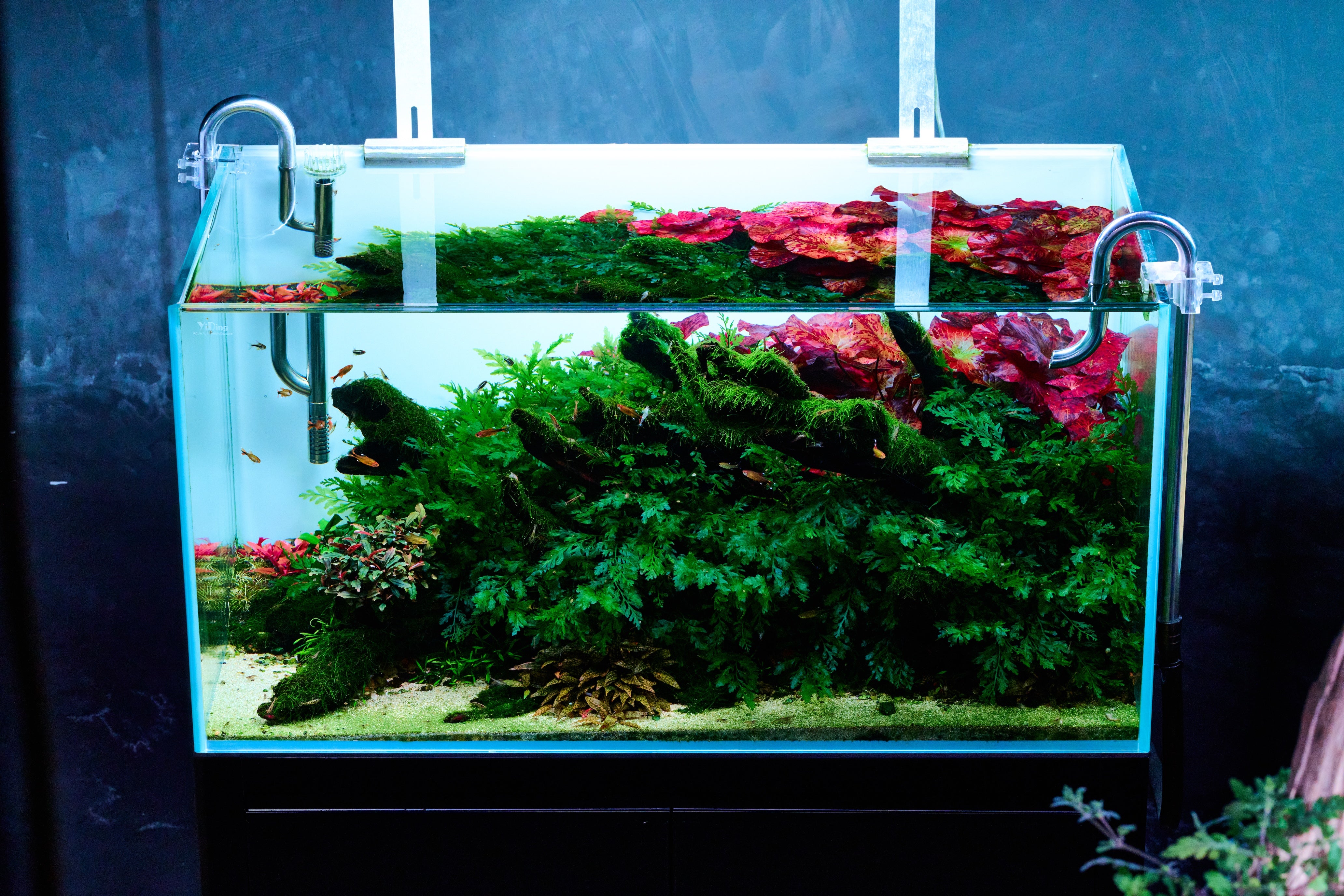
Understanding CO₂ in Planted Tanks
Carbon dioxide is one of the most talked about topics in planted aquariums, but it does not need to be complicated. It is one of the three main building blocks of plant growth alongside light and nutrients. When these three elements are balanced, plants grow faster, healthier, and with better colour.
For many aquariums, CO₂ is optional rather than essential. Plenty of plants can thrive in low-tech setups without added CO₂, particularly hardy species such as Anubias, Java Fern, Cryptocoryne, Vallisneria, Bucephalandra, and mosses. However, once lighting is increased or more demanding plants are introduced, CO₂ becomes much more important.
Do I Need CO₂?
Many plants can survive without CO₂, but there is a big difference between surviving and thriving. Even plants that do not necessarily require CO₂ often grow faster, healthier, and with better colouration.
Plants such as stem plants, carpeting plants, red plants, and many rarer species can struggle to display their best form without stable CO₂ injection. Slower growth, weaker colour, smaller leaves, and algae issues can all point towards carbon limitation.
Signs You May Benefit From CO₂
- Slow or stunted plant growth
- Pale or weak colouration
- Stem plants becoming leggy or sparse
- Persistent algae despite balanced nutrients
Types of CO₂ Systems
The two main types of CO₂ supplementation are pressurised systems and DIY systems. In this guide, we will focus on pressurised CO₂ systems, as they are the most reliable, consistent, and effective option for planted aquariums.
Key Characteristics
- Most stable and effective method
- Precise control over CO₂ levels
- Ideal for demanding plants and stronger lighting
- Higher initial cost
- Requires monitoring to avoid stressing fish
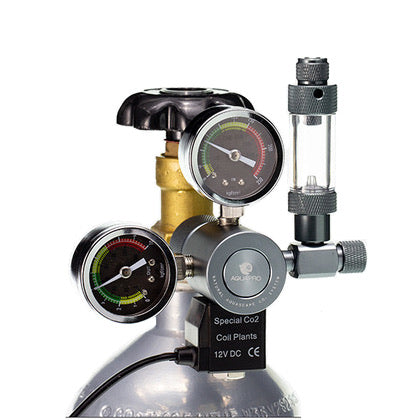
Main Components
- CO₂ cylinder
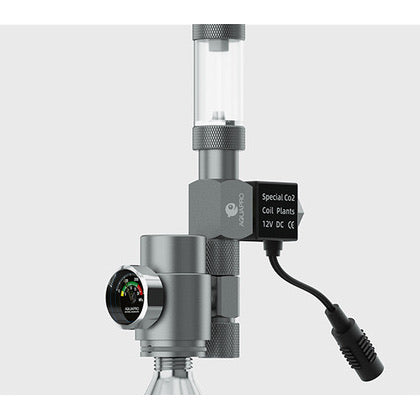
- Regulator
- Solenoid valve
- Bubble counter
- Diffuser or reactor
- Drop checker
Best Use in Aquascaping
Pressurised CO₂ is ideal for aquascapers keeping carpets, red plants, dense stem plant layouts, or high-light aquariums. It is also the best choice for hobbyists who want maximum plant growth and consistency.
How a Pressurised CO₂ System Works
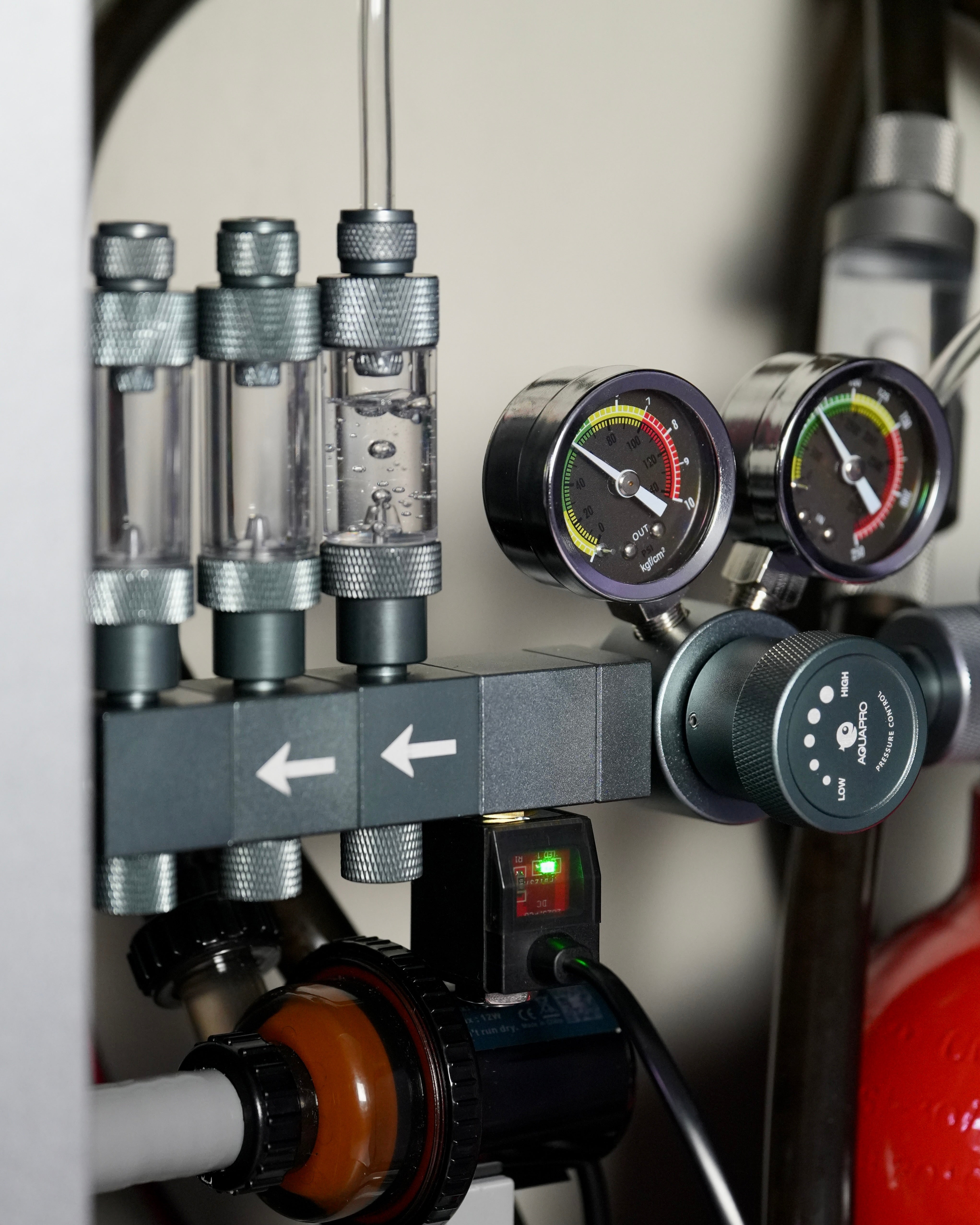
A pressurised system stores CO₂ gas inside a cylinder. The regulator reduces the high pressure from the canister into a usable flow rate, which is then controlled through a needle valve and bubble counter.
The bubble counter allows you to see how much CO₂ is being added, usually measured in bubbles per second. The gas is then fed into a diffuser or reactor, where it dissolves into the aquarium water.
A solenoid valve is often connected to a timer so the CO₂ turns on and off automatically with the aquarium lights.
How to Operate a CO₂ System
- Attach the regulator securely to the CO₂ cylinder.
- Fill the bubble counter with water.
- Connect airline tubing from the bubble counter to the diffuser.
- Place the diffuser low in the aquarium to allow maximum contact time.
- Slowly open the CO₂ cylinder.
- Adjust the regulator and needle valve until you reach the desired bubble rate.
- Allow the system to run for several hours and monitor livestock closely.
As a starting point, many hobbyists begin with around 1 bubble per second for smaller aquariums and increase gradually depending on plant mass and aquarium size.
CO₂ is usually switched on around 1-2 hours before the lights come on, and switched off around 1 hour before the lights go out.
Monitoring CO₂ Levels
Monitoring CO₂ is important because too little will not benefit plants, while too much can stress or even kill livestock.
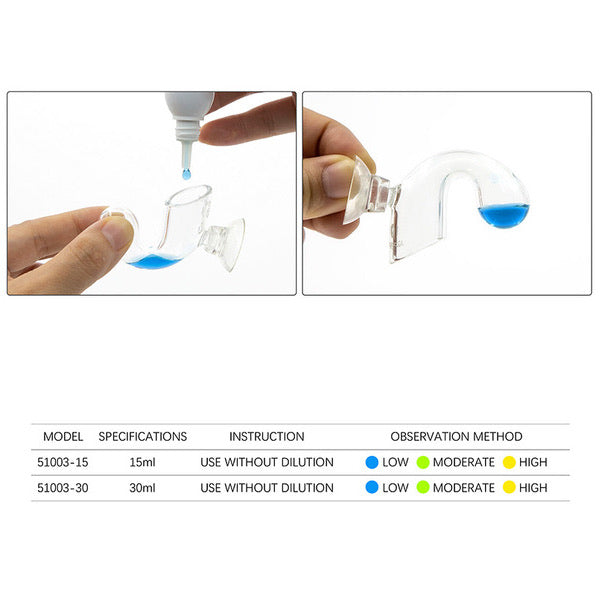
The most common way to monitor CO₂ is with a drop checker. A drop checker contains indicator fluid that changes colour depending on CO₂ levels.
- Blue: Too little CO₂
- Green: Ideal CO₂ level
- Yellow: Too much CO₂
Fish behaviour is also a useful indicator. If fish are gasping at the surface, breathing heavily, or behaving unusually, reduce CO₂ immediately and increase surface agitation.
It is always best to increase CO₂ slowly over time rather than making sudden large adjustments.
CO₂ Canisters
There are plenty of CO₂ canister options available these days. All you really need is a source of CO₂, and it does not necessarily have to be hobby-specific.
Besides traditional aquarium CO₂ canisters, many hobbyists also use soda machine bottles, fire extinguishers, industrial cylinders, or larger refillable gas bottles.
Aquarium-specific canisters are often smaller and more convenient, but they can also be more expensive.
When handling pressurised gas, always follow instructions carefully, secure cylinders upright, and check fittings regularly for leaks.
Final Thoughts
CO₂ should be viewed as a tool rather than a requirement. Many beautiful planted aquariums are grown without it, especially when using hardy, low-maintenance plants.
However, once lighting, fertilisation, and plant demands increase, CO₂ becomes one of the most important factors for success. Stable CO₂ can dramatically improve growth, colouration, plant health, and overall aquascape quality.
The best approach is often to start simple, understand the basics of lighting and fertilisation first, and then introduce CO₂ once you are ready. When used correctly, it can completely transform the look and growth of a planted aquarium.