

Introduction
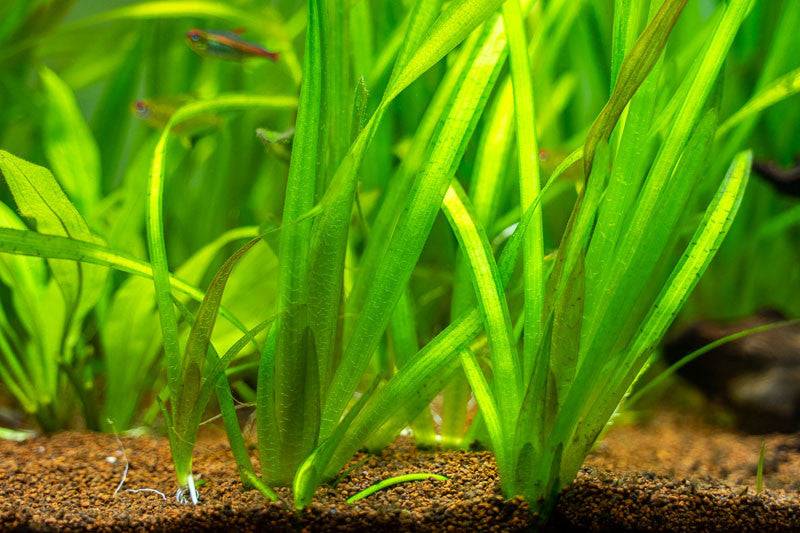
Rosette plants are a vast group of aquarium plants available day to day but not often recognised for what they are. They have unique structure, bold leaf shapes, and are very visually attractive within an aquascape. Unlike stem plants that grow vertically from a single stem, rosette plants grow from a central crown with leaves radiating outward, often forming clusters or clumps.
From beginner favourites such as Cryptocoryne and Echinodorus to specialist genera like Eriocaulon, rosette plants are used in everything from low-maintenance planted aquariums to high-end aquascapes. Their wide variety of sizes, colours, and textures makes them incredibly versatile.
This guide explains how rosette plants grow, how to care for them, and the major rosette plant genera commonly found in planted aquariums.
What Are Rosette Plants?
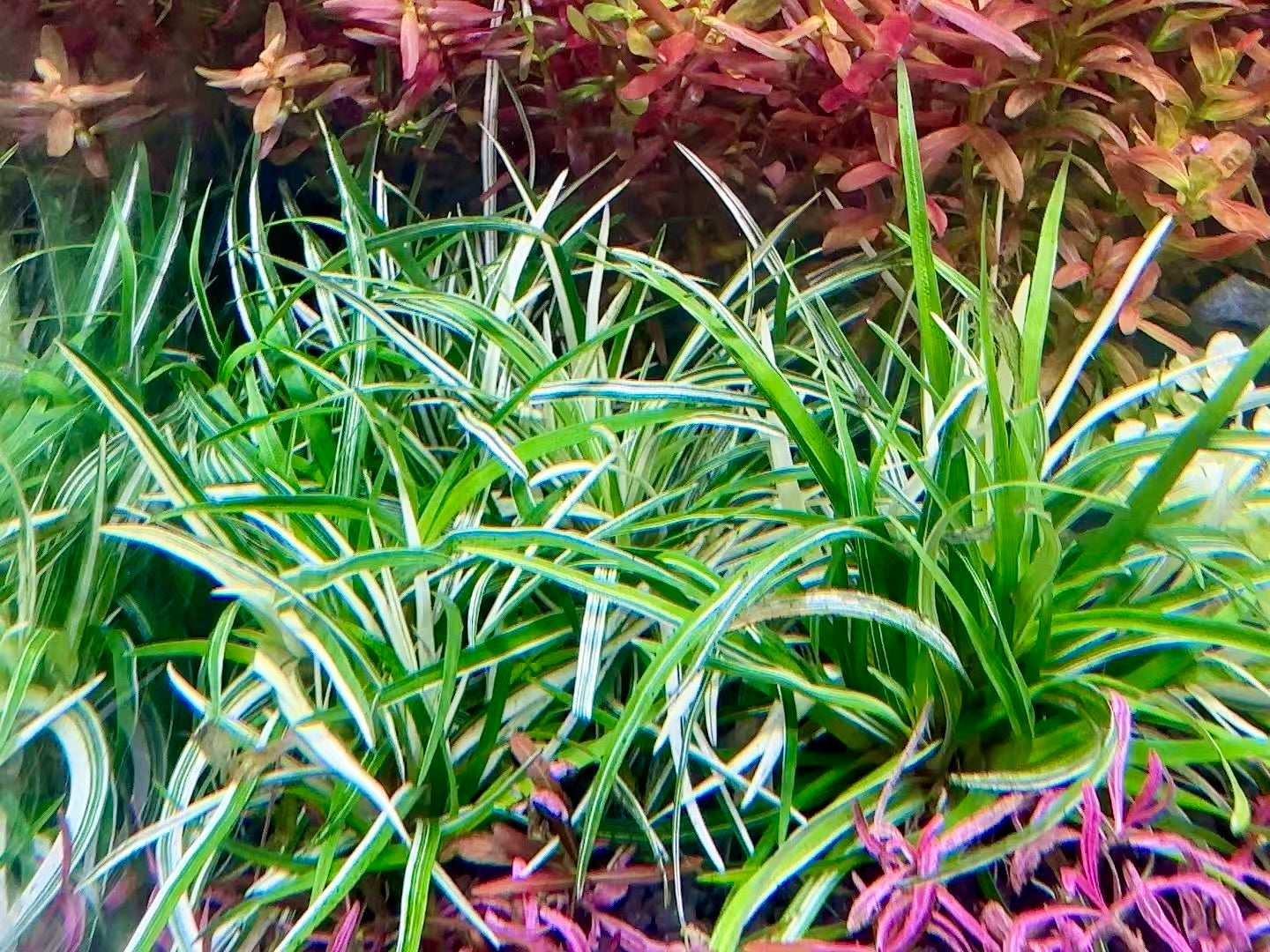
Rosette plants grow from a central growing point known as a crown. New leaves emerge directly from this crown, creating a circular or layer-like growth pattern. Due to this process, the outermost leaves are the oldest.
Unlike stem plants, which absorb most nutrients from the water column, rosette plants are primarily root feeders. They develop extensive root systems and benefit greatly from nutrient-rich substrates or root fertilisers.
Key Characteristics
- Leaves grow from a central crown
- Strong root systems and feeders
- Moderate to slow growth
- Wide range of leaf shapes and colours
- Excellent focal and structural plants
Why Rosette Plants Are Popular
Rosette plants are often used as the framework of an aquascape. While stem plants provide colour and density, rosette plants create shape, contrast, and visual weight.
They are especially useful for:
- Creating focal points
- Adding structure and depth
- Providing natural transitions between hardscape and plants
- Creating foreground, midground, and background features
- Long-term low-maintenance planting
Many rosette species can remain in place for years, gradually becoming larger and more impressive over time.
Rosette Plant Care Basics
Light, Fertiliser and CO₂ Balance
Most rosette plants grow well under moderate lighting, although certain species benefit from stronger lighting and CO₂ injection.
Because they are primarily root feeders, substrate quality is often more important than water column fertilisation.
Rosette plants generally perform best with:
- Nutrient-rich aqua soil
- Root tabs or root fertilisers
- Stable fertilisation
- Consistent lighting
- Good water circulation
Common signs of nutrient deficiencies include:
- Yellowing leaves
- Transparent patches
- Stunted growth
- Reduced leaf size
Many species grow successfully without added CO₂. However, CO₂ can significantly improve growth speed, leaf size, colouration, and overall health. Species such as Eriocaulon benefit greatly from stable CO₂ injection. Most only need low to moderate injection rate roughly about 10 - 15 ppm, and the results will be dramatic.
Preferred total dissolved solids (TDS) are generally between 100 and 150, with softer water.
Early Care
Rosette plants should be planted carefully to avoid burying the crown, which is the central growing point where all new leaves emerge. Only the roots should be covered by substrate, while the crown remains slightly exposed above the substrate surface.
After planting, many species undergo an adjustment period as they adapt to their new environment. This is especially common when transitioning from nursery plants to submerged aquarium conditions. During this period, older leaves may soften, yellow, or melt away before new underwater-adapted growth begins to emerge.
Unlike fast-growing stem plants, rosette plants often invest considerable energy into root development before producing significant visible growth above the substrate. It is not uncommon for newly planted specimens to appear inactive for several weeks while establishing a strong root system.
To encourage successful establishment:
- Minimise disturbance after planting
- Maintain consistent lighting and fertilisation
- Avoid major changes to water parameters
- Ensure sufficient substrate nutrition
- Remove damaged leaves only when necessary
Placement in the Aquarium
Rosette plants are among the most versatile plants in aquascaping and can be used throughout the aquarium depending on their mature size, growth habit, and visual impact.
Smaller species are often used in the foreground and midground, while larger species can become dominant background plants or dramatic centrepiece specimens. Their strong structural shapes make them particularly useful for creating focal points.
Placement is primarily determined by three factors:
Plant Size
The mature size of the plant is often the most important consideration. While many rosette plants are sold as small specimens, some species can become surprisingly large over time. Large species such as Echinodorus and Barclaya are generally best suited to the background or as standalone feature plants, while smaller Cryptocoryne and Eriocaulon species can be positioned closer to the foreground.
Growth Rate
Most rosette plants grow steadily rather than rapidly, making them relatively low maintenance compared to stem plants. Slower growth allows them to maintain their intended position within an aquascape for longer periods without frequent trimming or intervention.
Growth Form
Different rosette plants grow in very different ways. Some remain compact and tightly clustered, while others spread through runners, producing new plants that gradually colonise surrounding areas.
Species such as Cryptocoryne parva remain compact for years, whereas many Vallisneria and Echinodorus species can eventually occupy significant portions of an aquarium through runner production or leaf expansion.
Understanding a plant's mature size and growth pattern before planting helps prevent overcrowding and ensures each species has adequate room to develop naturally. When given sufficient space, rosette plants often become some of the most impressive and long-lasting features within a planted aquarium.
Popular Rosette Plants
Different genera have very different appearances, care requirements, and growth habits. Learning the main groups makes plant selection much easier.
Echinodorus (Amazon Sword)

Echinodorus are one of the most iconic species of plants in the aquarium and extremely popular in the hobby. Often known as Amazon Sword Plants, they are among the largest and boldest rosette plants available. They are easy to grow and make impressive standalone plants.
Key Characteristics
- Large broad leaves
- Fast root development
- Beginner-friendly
- Strong growth under nutrient-rich conditions
Popular Species
- Echinodorus ‘Red Diamond’
- Echinodorus ‘Ozelot Green’
- Echinodorus grisebachii
- Echinodorus major martii
- Echinodorus aflame
Best Use
Centrepieces, background planting, and large planted aquariums.
Cryptocoryne

Cryptocoryne is one of the most diverse and popular aquarium plant genera. Species range from tiny foreground plants to large specimen varieties, with leaf colours varying from green and bronze to red and pink.
Key Characteristics
- Huge variety of leaf shapes
- Adaptable and hardy
- Moderate growth
- Strong root systems
Popular Species
- Cryptocoryne wendtii
- Cryptocoryne parva
- Cryptocoryne nurii
- Cryptocoryne flamingo
Best Use
Foregrounds, midgrounds, natural aquascapes, and low-maintenance planted tanks.
Eriocaulon

Eriocaulon species are rarer and more exclusive rosette plants known for their unique grass-like leaves and geometric growth patterns. Many species require stable conditions and are considered more advanced than most rosette plants. Great for collectors and more experienced aquarists.
Key Characteristics
- Distinctive architectural appearance
- Fine grass-like foliage
- Compact growth
- Sensitive to poor conditions
- Exclusive and collectible
Popular Species
- Eriocaulon cinereum
- Eriocaulon ‘Vietnam’
- Eriocaulon ratnagirium
- Eriocaulon quinquangulare
Best Use
Showpiece aquascapes, foreground features, and specialist planted aquariums.
Aponogeton
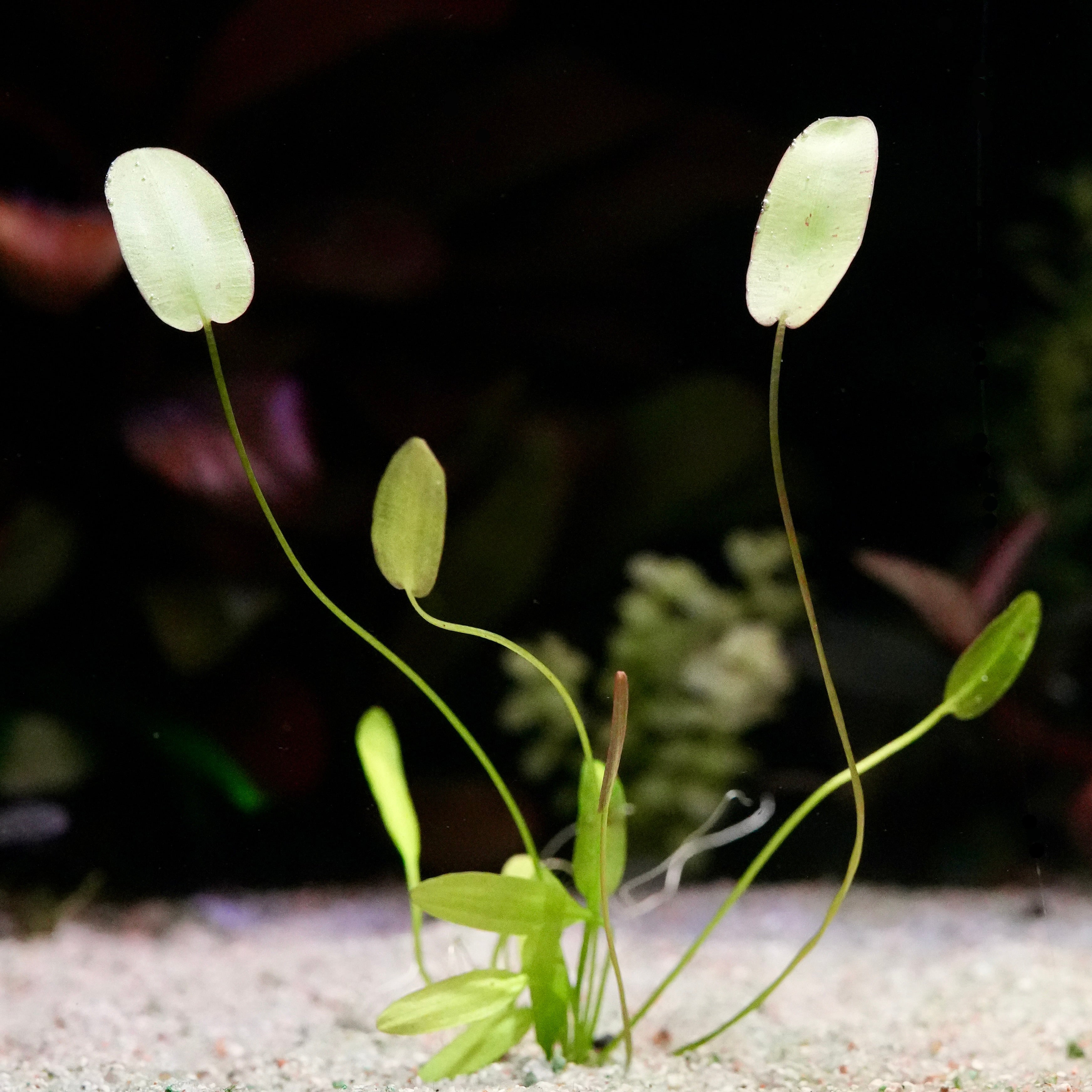
Aponogeton species produce long elegant leaves that rise to the surface, and often develop striking flowers above the water surface. They have a fast growth rate and often carry bulbs. Many are relatively easy to grow given sufficient substrate nutrition.
Key Characteristics
- Attractive leaf textures
- Strong root systems
- Seasonal growth patterns in some species
- Unique flowering potential
Popular Species
- Aponogeton crispus
- Aponogeton natans
- Aponogeton ulvaceus
Best Use
Specimen plants, centrepieces, and larger aquariums.
Blyxa
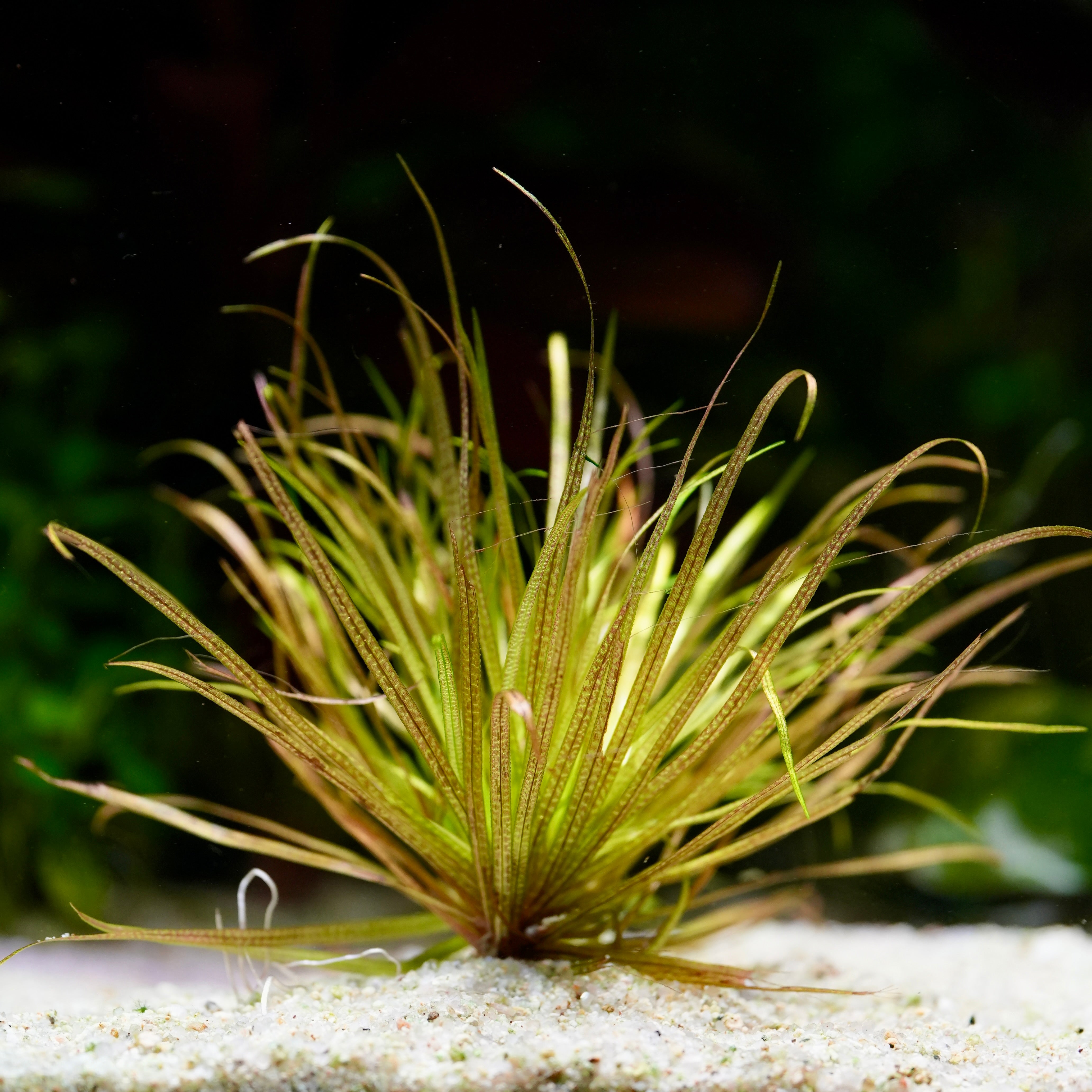
Blyxa species produce flowing, grass-like leaves that bridge the gap between traditional rosette plants and grassy plants. They create excellent movement and texture within an aquascape, and are found in the vast majority of aquascapes.
Key Characteristics
- Soft flowing leaves
- Moderate growth
- Attractive under strong lighting
- Excellent texture contrast
Popular Species
- Blyxa japonica
- Blyxa aubertii
Best Use
Midground planting, transition zones, and natural-style aquascapes. Can be attached in between hardscape.
Final Thoughts
Rosette plants are one of the most diverse and adaptable groups of aquatic plants available to aquarists. Their broad range of leaf shapes, colours, textures, and growth habits allows them to fulfil almost any role within an aquascape, from tiny foreground accents to large statement centrepieces. Many species have relatively low maintenance requirements which make them suitable for both beginners and experienced aquascapers. From hardy Cryptocoryne and Echinodorus to specialist plants such as Eriocaulon and Barclaya, there is a rosette plant suitable for virtually every aquarium style. Hobbyists can really push their skills and experience in growing rosette plants.
Understanding the importance of substrate nutrition, proper planting technique, and stable water conditions is often the key to success. Once these fundamentals are mastered, rosette plants become some of the most rewarding plants to grow in a planted aquarium. Their ability to develop into impressive specimens over time makes them extremely attractive amongst aquascapers.