

Introduction
Epiphyte plants are some of the easiest and most versatile plants used in aquascaping. They are simple to position, forgiving in most aquarium conditions, and pair naturally with hardscape. Their slow growth and low maintenance make them an excellent choice for beginners, while their texture and structure make them a favourite amongst experienced aquascapers as well.
Unlike fast-growing stem plants, most epiphytes grow slowly and require minimal trimming. Once established, they help an aquarium look more mature, natural, and balanced over time.
What Are Epiphyte Plants?
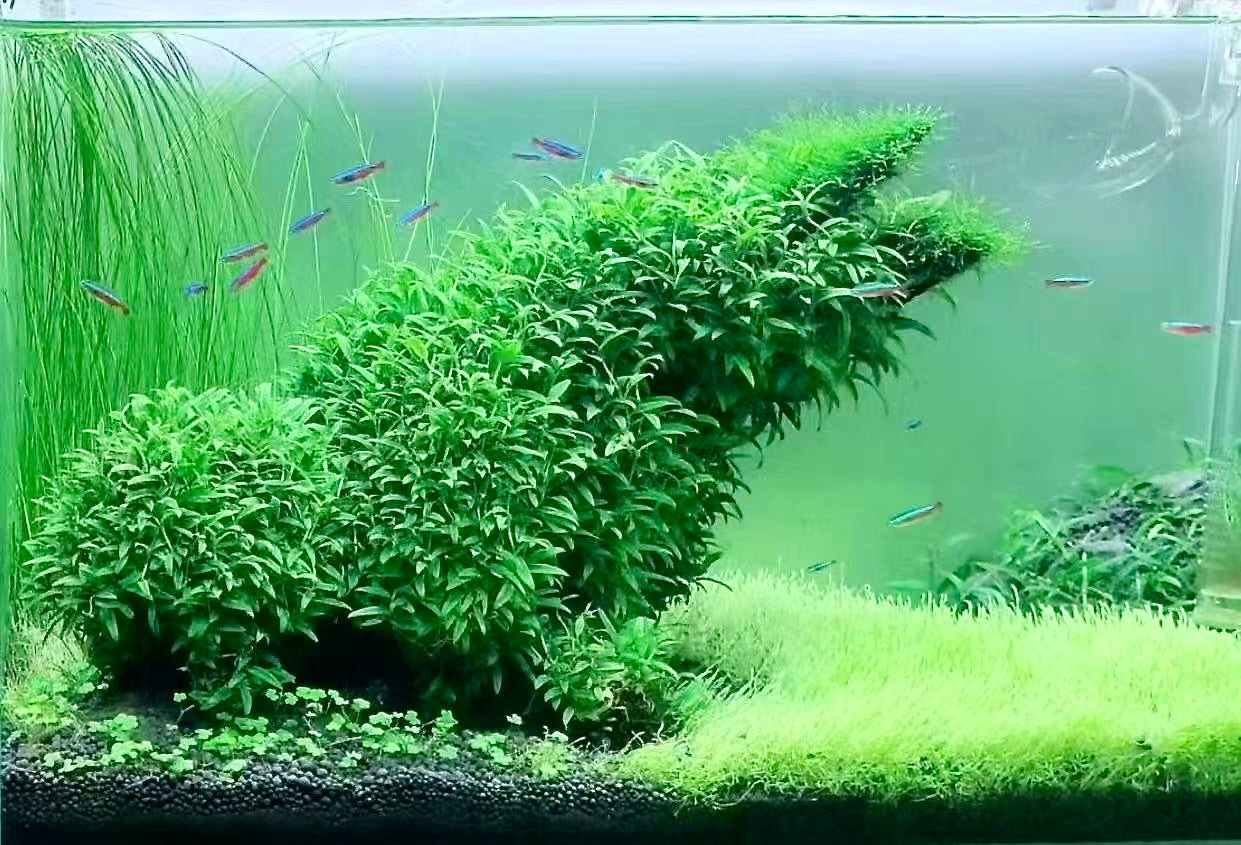
Epiphyte aquarium plants can grow attached to hard surfaces rather than planted directly into substrate. In the aquarium, this usually means attaching them to:
- Driftwood
- Aquarium rocks
- Lava stone
- Small plant weights
- Crevices within hardscape
Most epiphyte plants grow from a rhizome, a thick horizontal stem from which both roots and leaves develop. It is important not to bury the rhizome beneath the substrate, as it can rot if covered for extended periods.
The roots of epiphyte plants are mainly used to grip onto surfaces. While they still absorb nutrients from the water column, they are not planted in the same way as heavy root-feeding plants such as Cryptocorynes or Amazon swords.
Popular epiphyte groups include mosses, Bucephalandra, Anubias, Microsorums, and Bolbitis.
Why Epiphyte Plants Are Popular
Epiphytes are useful because they can be positioned almost anywhere in the aquarium. Moss attached to rock can make hardscape appear softer and more natural, while Anubias or ferns growing from driftwood can give the impression of age and maturity. Small Bucephalandras can be tucked into shaded cracks and crevices to add depth, colour, and fine detail throughout the layout.
Because many epiphytes grow slowly, they are generally easier to manage than fast-growing stem plants. While they are not ideal for quickly filling out a new aquarium, they are excellent for creating long-term structure, texture, and stability within a scape.
They also work especially well in tanks with thinner substrate, exposed hardscape, or layouts where planting space is limited. For aquariums built heavily around wood and stone, epiphytes are often one of the most practical and visually effective plant choices.
Epiphyte Plant Care Basics
Light, Fertiliser and CO₂ Balance
Most epiphytes are not demanding plants, but they still need balance. Light, fertiliser and CO2 all work together. If the light is increased, the plants will usually need more nutrients and carbon to keep up. If the balance is off, algae often takes advantage before the plants do. For many epiphyte-heavy tanks, low lighting is a sensible starting point. Very strong light is risky because slow-growing leaves are more likely to collect algae.
Since epiphytes are generally slow-growing plants, they usually do not require heavy fertilisation. In fact, many species can be sensitive to over-fertilisation, so it is often recommended to err on the lower side when dosing nutrients. Both root fertilisation and water column fertilisation can be used successfully depending on the setup.
It is perfectly fine to grow epiphytes without planting them into substrate or soil. However, most will generally grow larger and faster if their roots are able to reach soil,.
CO₂ is not always required, especially epiphytes, however, their growth, health and colouration will be much better with the addition of CO₂.
Preferred level of total dissolved solids (TDS) in water is between 100 and 200, with soft to moderate hardness.
For beginners, it is usually better to start gently. Use a consistent lighting schedule, dose fertiliser carefully, and make changes slowly rather than adjusting everything at once.
Early Care
The first few weeks are about helping the plants settle. Check that attached plants have not come loose. Fish, shrimp, water flow or maintenance can sometimes dislodge newly placed plants before they have had time to attach. Remove yellowing, mushy or damaged leaves. This keeps the aquarium cleaner and allows the plant to put energy into healthy new growth.
Some plants may take time to adapt. Slow-growing epiphytes do not always show quick progress, so be patient. New leaves and fresh roots are good signs. Keep an eye on the balance of light, fertiliser and CO₂ during this period. Start with low light and short photoperiod. If algae starts appearing on older leaves, avoid panicking. Reduce excess light, improve flow, remove affected leaves if needed, and always make small adjustments.
Placement in the Aquarium
Epiphytes are flexible, but placement still matters. Anubias often does well in slightly shaded areas, such as under wood, beside rocks or around the midground. Bucephalandras are excellent for small details. Place them where they can be seen up close, such as the front edges of stones, small gaps in wood, or lower midground areas.
Microsorums and Bolbitis are useful for adding height and texture. They look natural attached to larger wood pieces or placed behind rocks where the leaves can grow out into open water.
Mosses can be used almost anywhere. They look beautiful on branches and stones, giving the tank an aged look.
As a general rule, think about the mature size of the plant, not just how it looks when newly bought. A small plant attached to the perfect spot looks much better than a large clump squeezed into the wrong place.
Popular Epiphyte Plants
Different genera have very different appearances, care requirements, and growth habits. Learning the main groups makes plant selection much easier.
Anubias

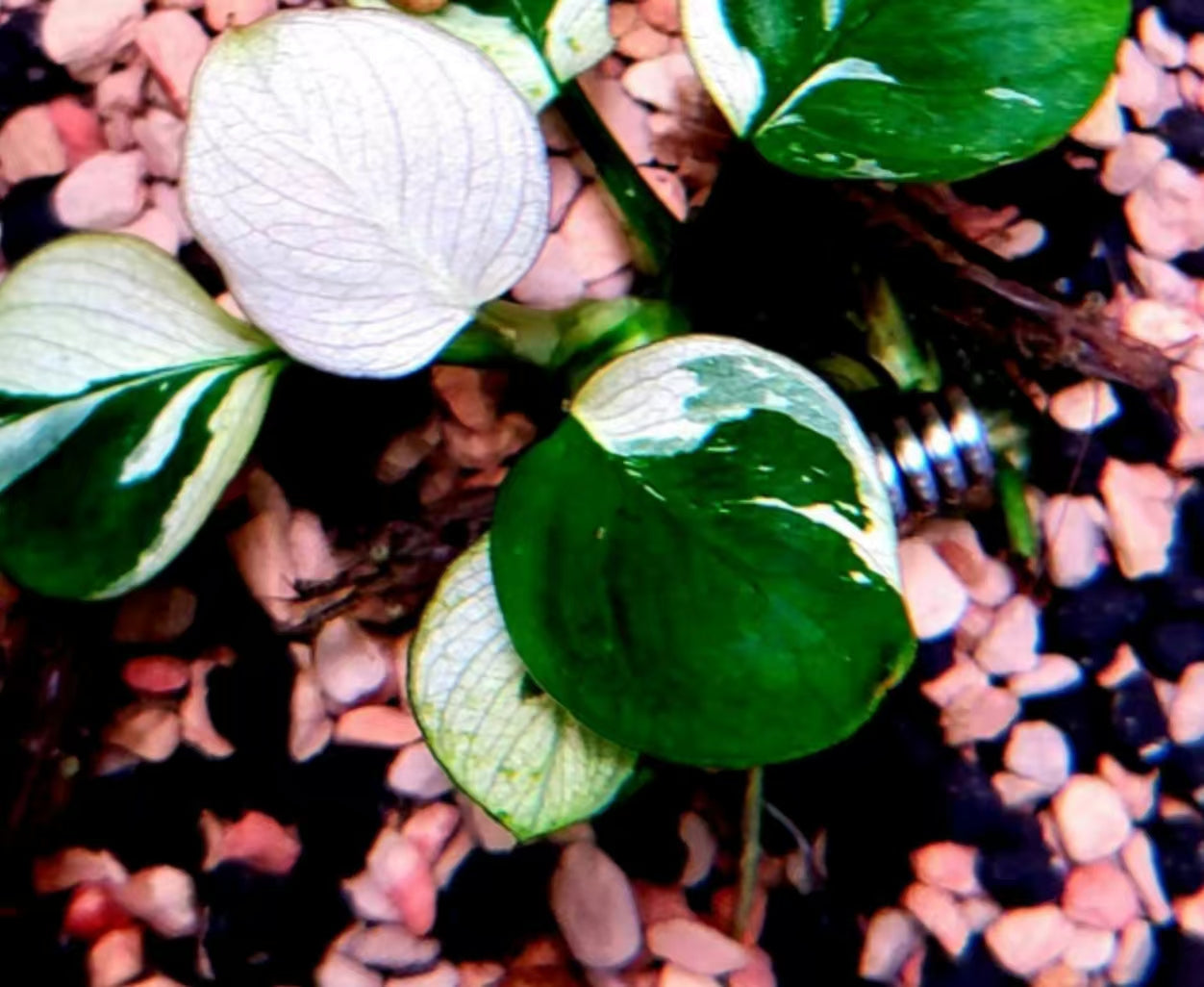
Anubias are classic beginner-friendly epiphytes. They are hardy, slow-growing, and tolerant of lower light compared with many other aquarium plants. Their wide variation in leaf shapes and sizes makes them useful in both simple planted tanks and more detailed aquascapes.
Key Characteristics
- Hardy and beginner-friendly
- Slow-growing and low maintenance
- Tolerant of lower light conditions
- Wide variety of leaf sizes and shapes
- Suitable for wood, rocks, and shaded areas
Popular Species
- Anubias nana
- Anubias nana ‘Petite’
- Anubias nana ‘Golden’
- Anubias ‘Coffeefolia’
Bucephalandra
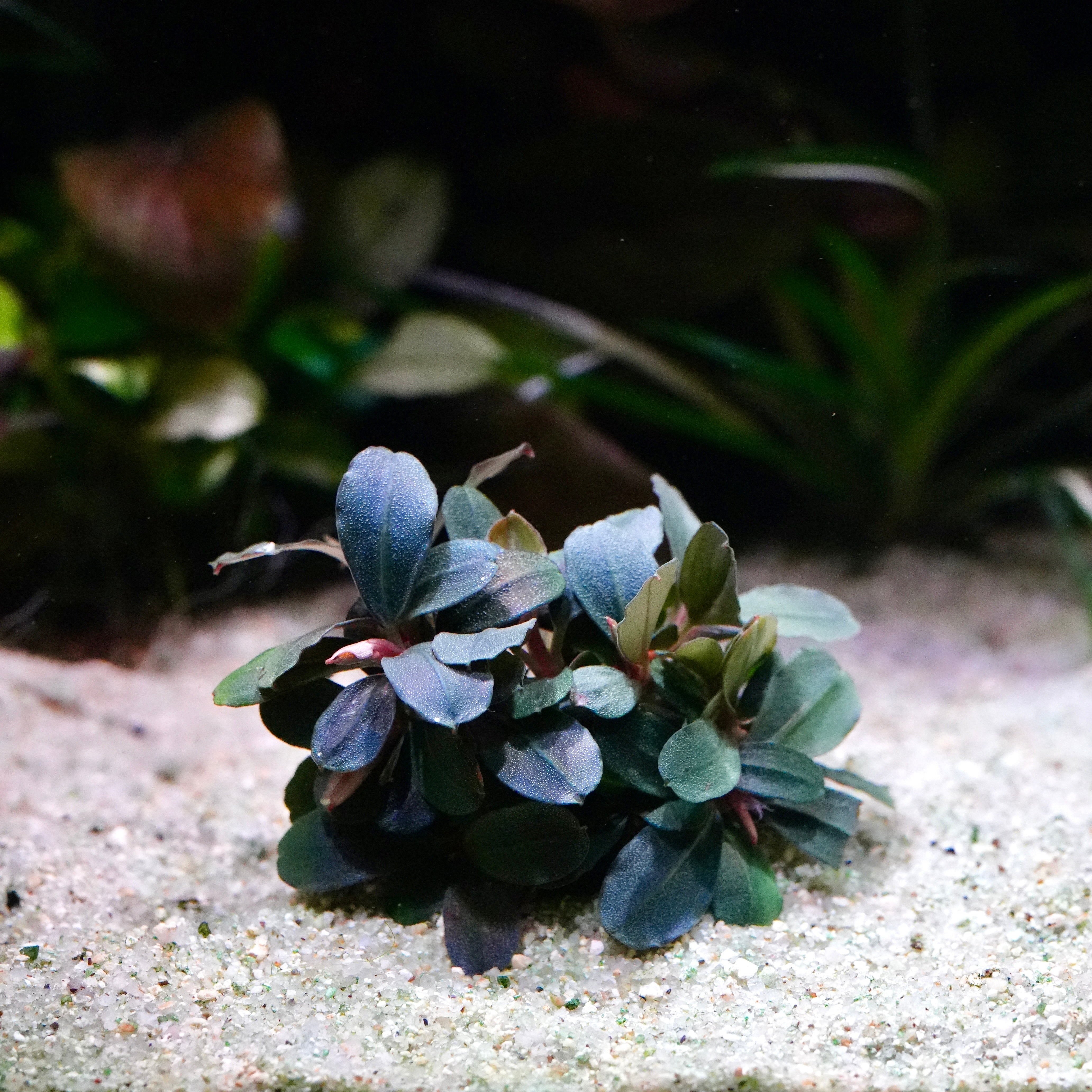
Bucephalandras are slow-growing epiphyte plants known for their wide range of leaf shapes, sizes, and colours. They are often used for fine detail work in aquascapes, where their compact growth and unique appearance can add a great deal of character. Their smaller size makes them ideal for cracks in driftwood, gaps between rocks, and shaded midground areas.
Key Characteristics
- Extremely diverse leaf shapes and colours
- Compact growth ideal for detailed aquascapes
- Slow-growing and highly decorative
- Prefer stable water conditions
- Sensitive to excessive fertilisation
Popular Species
- Bucephalandra ‘Theia Red’
- Bucephalandra ‘Sordida Blue’
- Bucephalandra ‘Kedagang’
- Bucephalandra ‘Helena’
Microsorum (Java Fern)
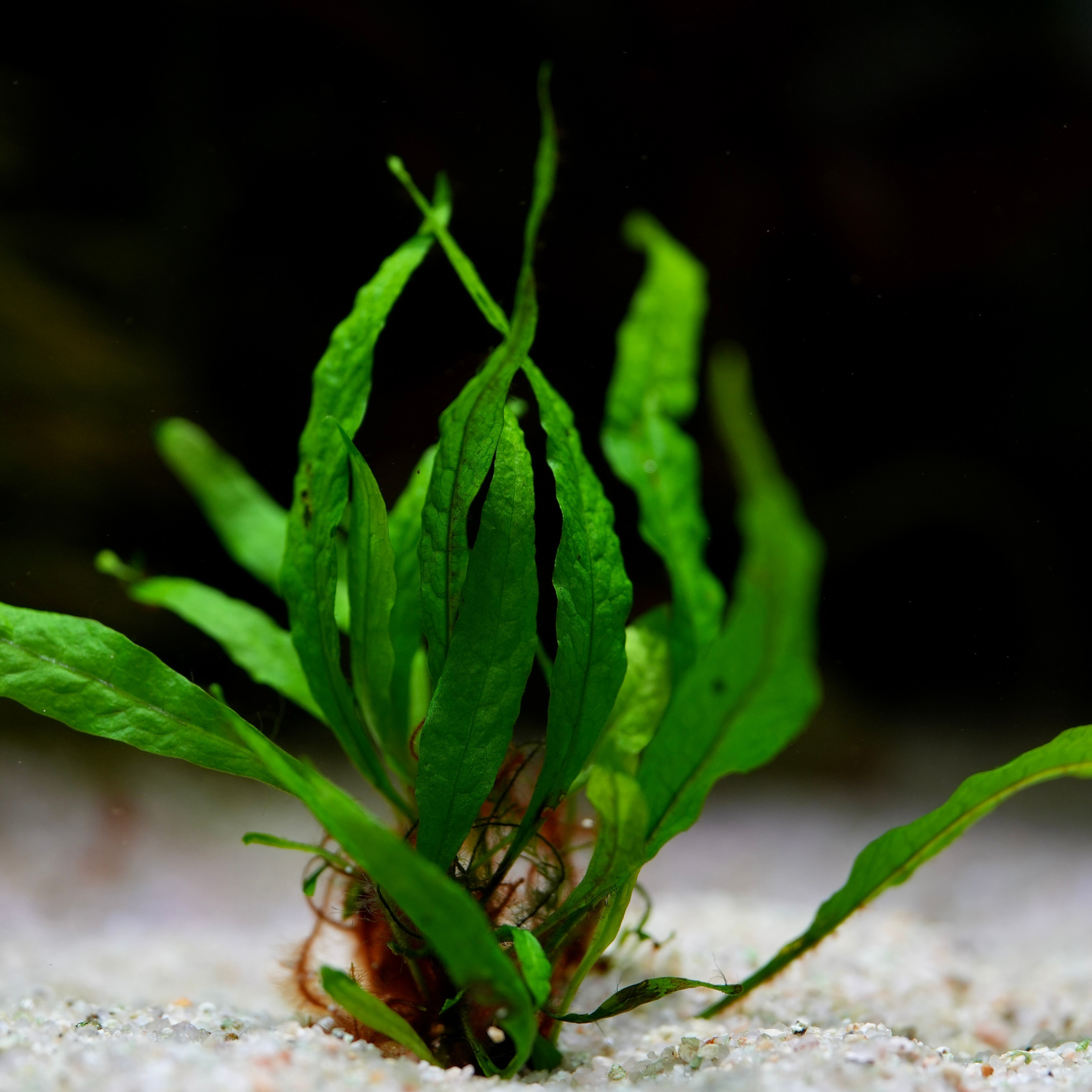
Microsorum, commonly known as Java fern, is another excellent epiphyte group for planted aquariums. It offers a softer, fern-like appearance that contrasts nicely against broader-leaf epiphytes such as Anubias.
Depending on the variety, Microsorum leaves may be broad, narrow, forked, or finely textured. Larger forms work well for creating height and movement in the midground or background, while smaller varieties can be placed around the base of hardscape.
Key Characteristics
- Fern-like texture and appearance
- Suitable for wood and rock attachment
- Wide variety of leaf forms
- Useful for creating height and movement
Popular Species
- Microsorum pteropus
- Microsorum pteropus ‘Narrow’
- Microsorum pteropus ‘Trident’
- Microsorum pteropus ‘Windelov’
Bolbitis
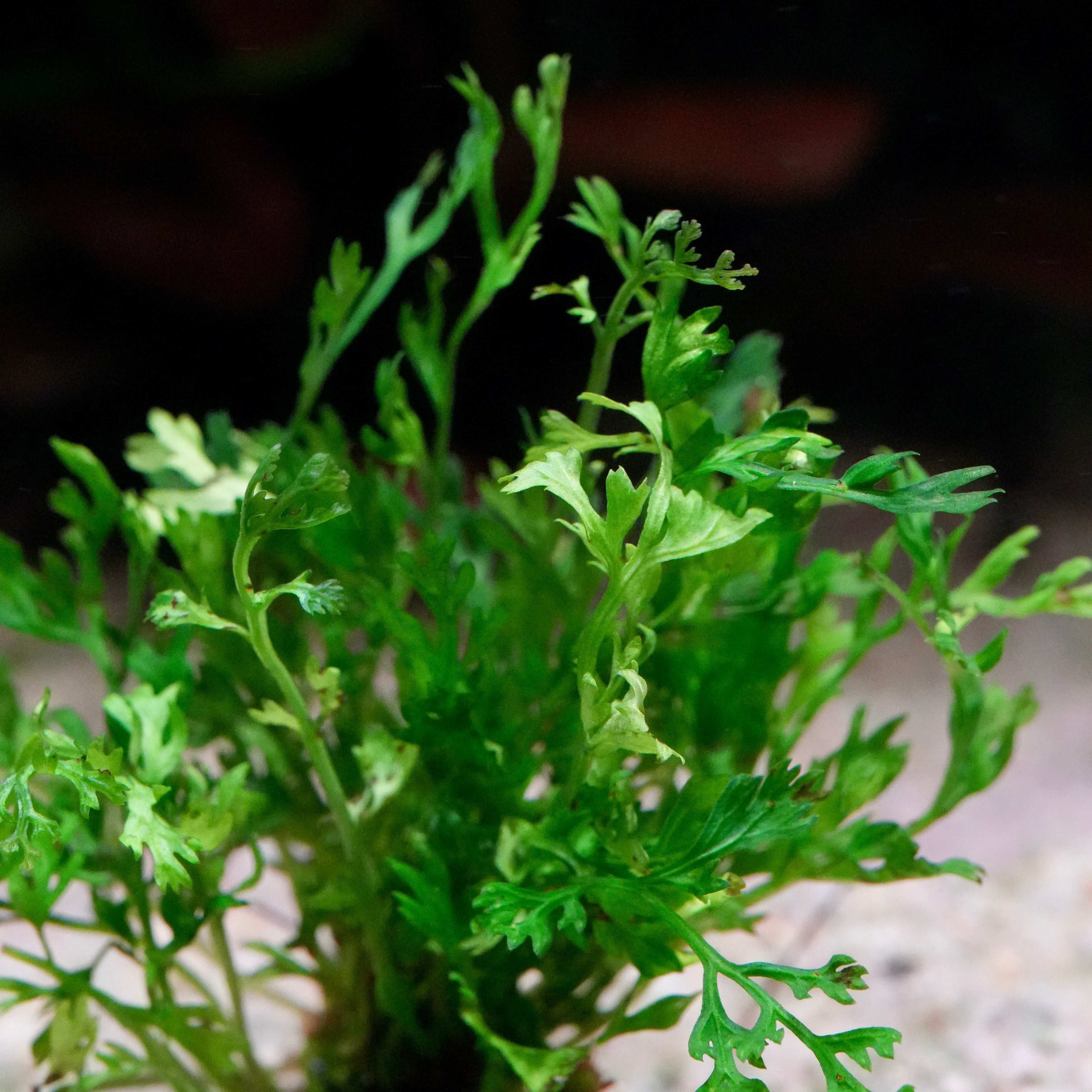
Bolbitis is a fern-like epiphyte known for its soft, flowing appearance and dark green translucent leaves. It creates a natural riverbank aesthetic and works especially well in aquariums with driftwood-heavy layouts.
Compared with Anubias or Bucephalandra, Bolbitis has a more delicate and fluid appearance. It is best placed in the midground or background where its leaves have room to spread naturally.
Bolbitis also benefits from gentle water movement. Positioned correctly, the leaves sway subtly in the current, creating a very natural effect. Areas with trapped debris around the rhizome should be avoided.
Key Characteristics
- Soft, flowing fern-like appearance
- Dark green translucent leaves
- Excellent for natural-style aquascapes
- Prefers gentle water flow
Popular Species
- Bolbitis heudelotii
- Bolbitis heteroclita 'Difformis'
Mosses
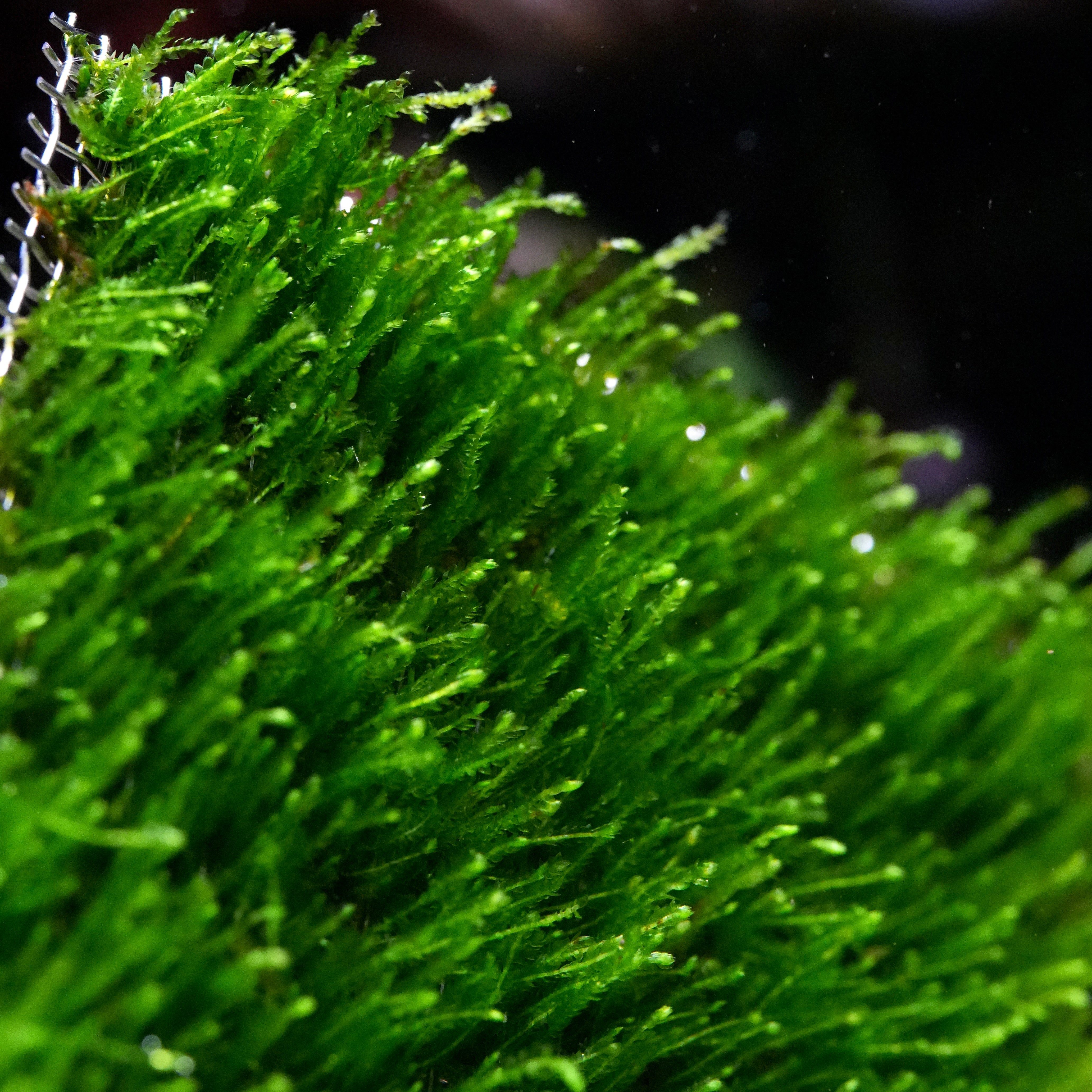
Mosses are one of the easiest ways to make hardscape appear mature and natural. They can be attached to rocks, roots, and driftwood, gradually forming a soft green covering over time.
When attaching moss, thinner layers usually establish more evenly and look more natural than thick clumps. Dense patches can trap debris and shade lower sections, causing deterioration over time. Regular trimming and good flow help keep moss healthy and tidy.
Key Characteristics
- Excellent for natural-looking hardscape
- Easy to attach to wood and stone
- Useful for foreground detail and texture
- Provides shelter for shrimp and fry
Popular Species
- Flame moss
- Christmass moss
- Fissidens fontanus
- Fissidens nobilis
Final Thoughts
Epiphyte plants are some of the most popular and versatile plants used in planted aquariums. They are practical, flexible, and naturally suited to aquascaping. Whether you are attaching moss to a small stone, or positioning Java fern along a large piece of driftwood, epiphytes help bring hardscape to life and create a more natural appearance.
Most epiphytes are not fast-growing plants, and that is important to remember. Their beauty develops gradually over time. A newly attached plant may initially look sparse, but once it settles in, it can completely transform the overall feel of the aquarium. For beginners, epiphytes are an excellent way to build confidence with planted tanks due to their forgiving nature and low maintenance requirements. For experienced aquascapers, they provide long-term structure, texture, and intricate detail that help refine a layout over time.
Keep the rhizome exposed, avoid excessive lighting and heavy fertilisation, and allow the plants time to establish. With patience and stable conditions, epiphytes can become some of the most reliable and rewarding plants in any aquarium.