

Introduction
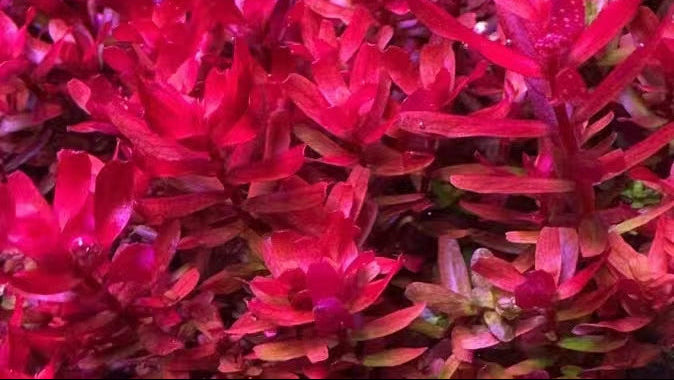
Stem plants are among the most popular and versatile aquarium plants available. They are fast growing, highly adaptable, and capable of transforming an aquarium with colour, texture, and movement. From beginner-friendly green stems to demanding red species used in professional aquascapes, stem plants form the backbone of many planted aquariums.
This guide explains how stem plants grow, how to care for them, and the major stem plant genera commonly used in aquariums. Understanding these groups makes it far easier to choose suitable plants for your aquarium and maintain healthy long-term growth.
What Are Stem Plants?
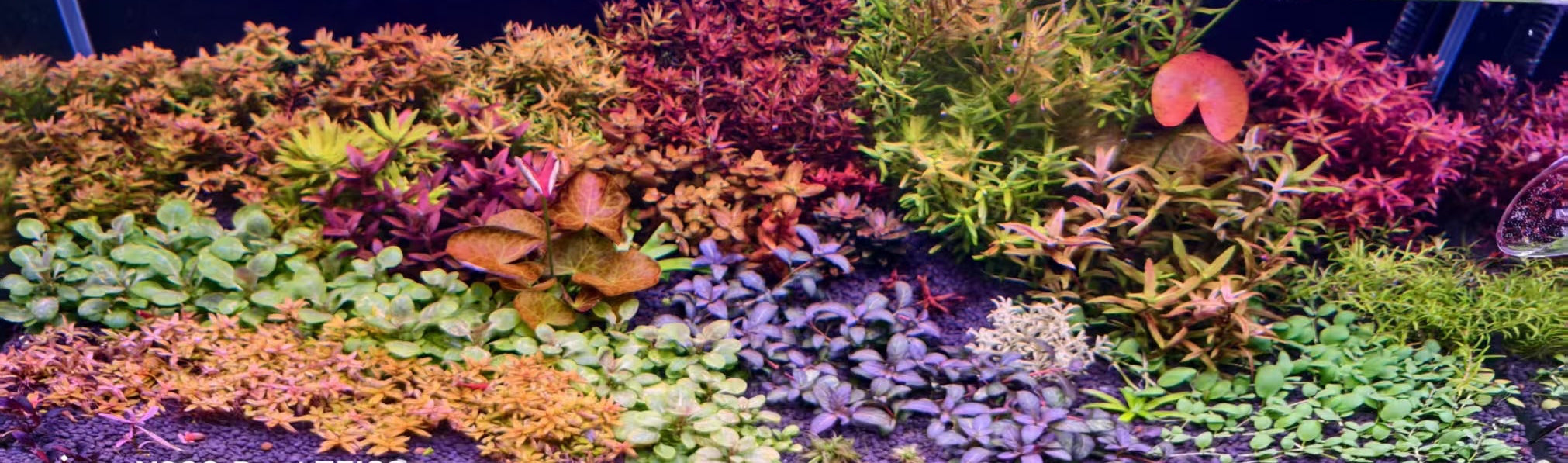
Stem plants grow vertically from a central stem with leaves emerging along the sides. Most species are planted directly into substrate and absorb the majority of their nutrients from the water column.
One of the biggest advantages of stem plants is their rapid growth rate. This makes them excellent for nutrient export, algae control, and quickly filling out an aquarium layout.
Most stem plants are also very easy to propagate. Simply trim the healthy top section and replant it into the substrate, where it will continue growing as a new plant.
Key Characteristics
- Upright vertical growth
- Fast to moderate growth rate
- Easy propagation through trimming
- Excellent for nutrient absorption
- Ideal for background and midground use
- Wide variety of colours and leaf shapes
Why Stem Plants Are Popular
Stem plants are widely used because they provide instant impact and quickly create dense, natural-looking aquascapes.
They are especially useful for:
- Creating colourful backgrounds
- Filling empty areas quickly
- Competing against algae
- Softening hardscape
- Adding movement and texture
- Learning trimming and aquascaping techniques
Fast-growing stems are often recommended in new aquariums because they help stabilise nutrients during the early stages of a planted tank.
Stem Plant Care Basics
Light, Fertiliser and CO₂ Balance
Most green stem plants grow well under moderate lighting, while colourful red species often require stronger lighting to display their best colouration.
Insufficient light commonly leads to:
- Leggy growth
- Wide stem spacing
- Pale leaves
- Lower leaf loss
Stem plants primarily feed from the water column, meaning liquid fertilisers are usually more important than root tabs. Aqua soil is also a great source of nutrients as it slowly leeches fertiliser into the water column. Fast-growing species can consume nutrients surprisingly quickly.
Many beginner stem plants can grow without added CO₂, but almost all stem plants benefit significantly from stable CO₂ injection. CO₂ often improves growth speed, leaf size, compactness, colour intensity, and overall plant health. High-light stem plant aquariums without CO₂ are often difficult to balance long term.
Preferred level of total dissolved solids (TDS) in water is between 150 and 200, with soft to moderate hardness.
Early Care
Stem plants are generally easy to transition and establish in the aquarium. Trim excessive roots or lower leaves before planting directly into the substrate. Provide adequate lighting and regular fertilisation, ensuring the stems are not shaded. Within a few days, the plants will usually begin rooting and producing new growth.
Placement in the Aquarium
Although stem plants are traditionally used in the background, they are far more versatile in practice. Placement depends mainly on plant size, growth rate, and growth pattern. Larger or faster-growing species are better suited to the background due to maintenance requirements, while slower-growing stems can work well in the foreground or midground. Some species also spread horizontally or creep outward rather than growing vertically, making them suitable for a wider range of aquascaping uses.
Popular Stem Plants
Different genera have very different appearances, care requirements, and growth habits. Learning the main groups makes plant selection much easier.
Rotala
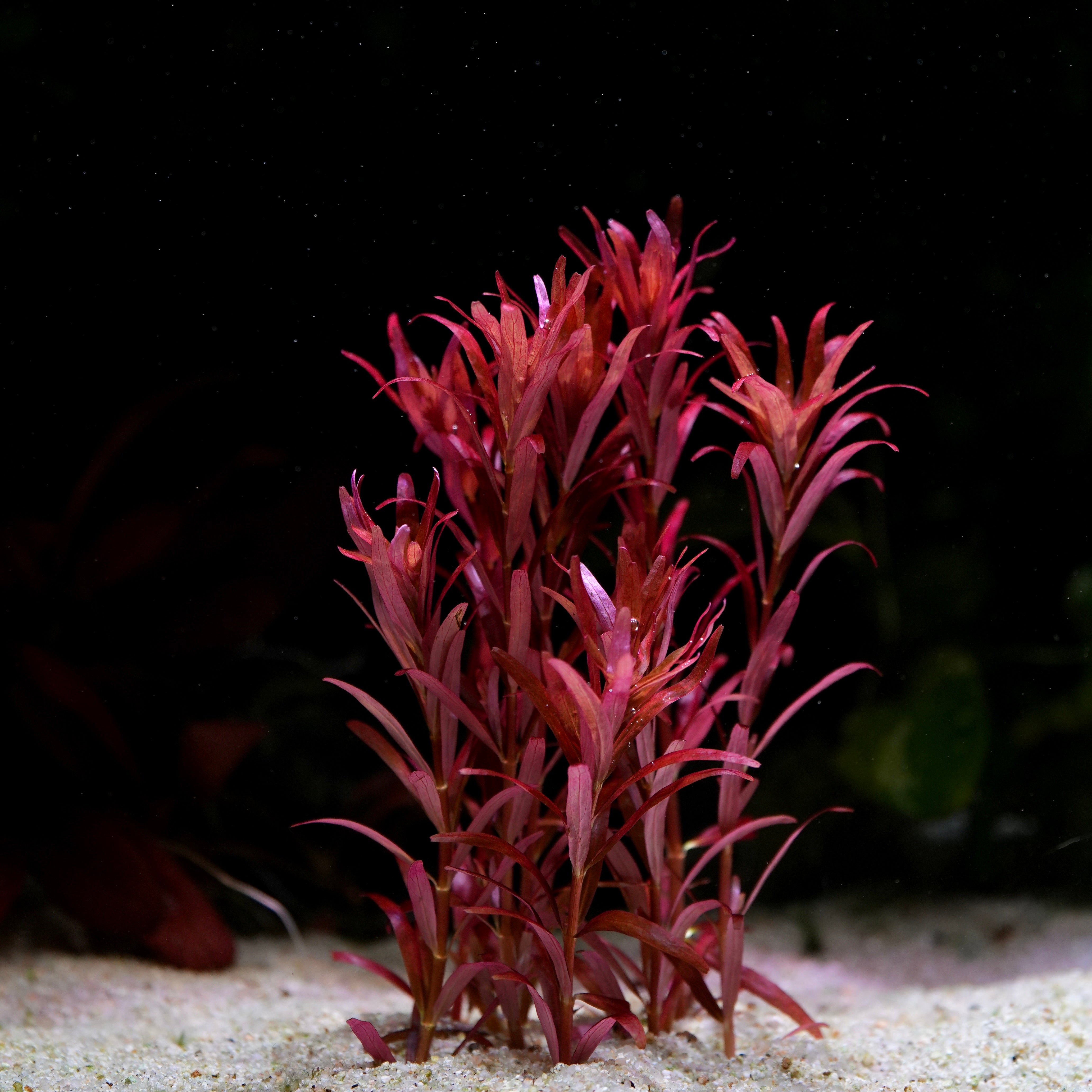
Rotala is one of the most popular and widespread stem plant genera in modern aquascaping. It is known for fine leaves, compact growth, and excellent colouration under strong lighting.
Many Rotala species transition from green to orange, pink, or deep red depending on lighting and nutrient balance.
Key Characteristics
- Fine delicate leaves
- Fast growth
- Compact appearance with trimming
- Strong colour potential
- Excellent for dense backgrounds
Popular Species
- Rotala rotundifolia (all variants)
- Rotala macrandra (all variants)
- Rotala wallichii
Best Use
Background bushes, Dutch layouts, colourful stem groups, and high-energy aquascapes.
Ludwigia
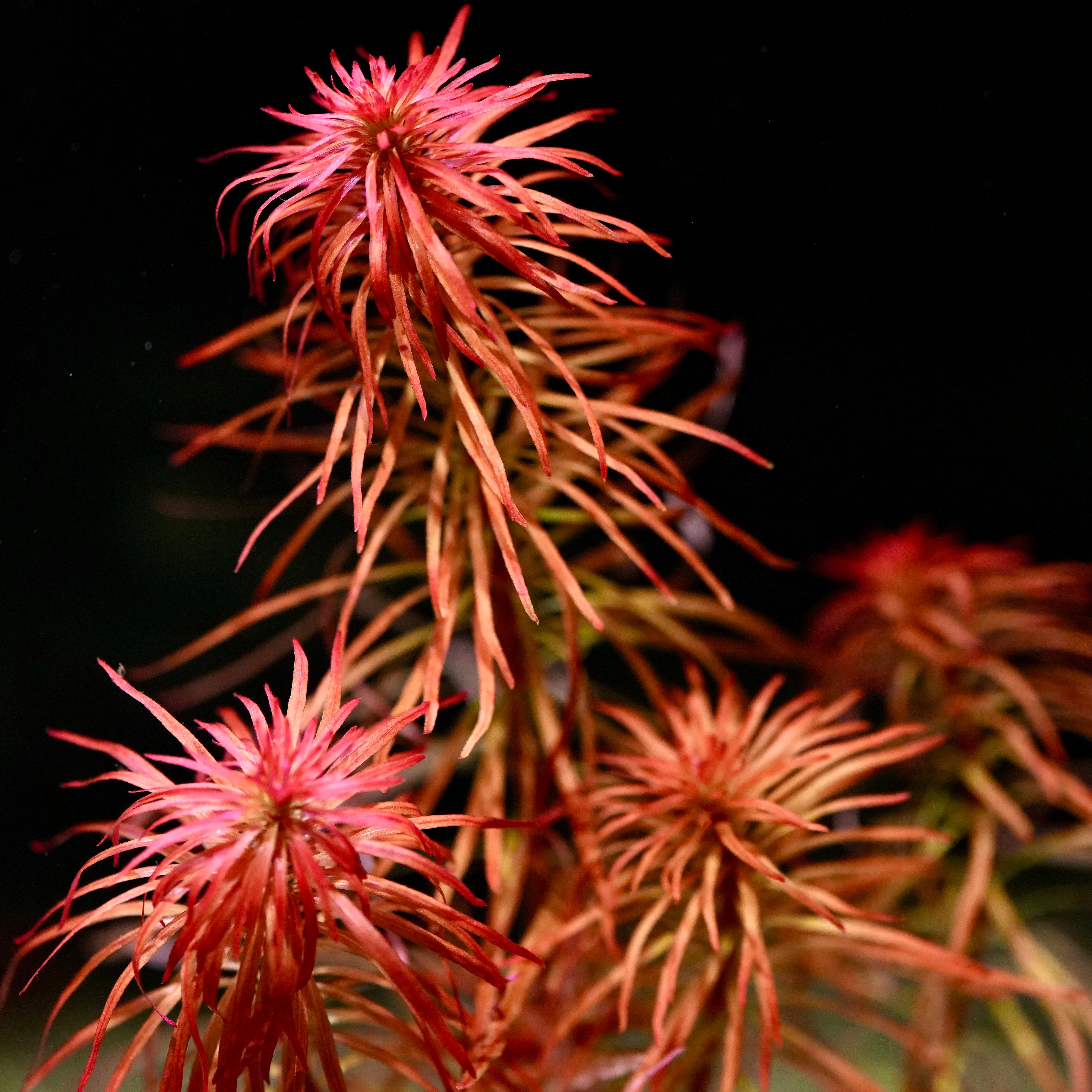
Ludwigia species are known for their broader leaves and warm red, orange, or bronze tones. They are often easier than many Rotala species while still providing excellent colour.
Key Characteristics
- Broader leaf structure
- Strong reds and oranges
- Moderate growth rate
- Beginner-friendly options available
Popular Species
- Ludwigia palustris
- Ludwigia inclinata
- Ludwigia repens
- Ludwigia arcuata
Best Use
Colour contrast, background accents, and transitional planting zones.
Alternanthera

Alternanthera species are among the most vibrant red aquarium plants available. They are prized for their deep reds, pinks, and purples.
Compared to many stem plants, they grow slower and often require stable conditions to thrive.
Key Characteristics
- Strong red and purple tones
- Broader leaves
- Slower growth
- More demanding
Popular Species
- Alternanthera reineckii (all variants)
- Alternanthera rosaefolia
Best Use
Focal points, midground colour accents, and contrast planting.
Bacopa

Bacopa species are some of the most beginner-friendly stem plants available. They feature thick stems and round leaves with a clean, simple appearance.
They tolerate a wide range of conditions and grow reliably even without CO₂.
Key Characteristics
- Thick sturdy stems
- Rounded leaves
- Slower to moderate growth
- Very hardy
Popular Species
- Bacopa salzmannii
- Bacopa colorata
- Bacopa caroliniana
- Bacopa monnieri
Best Use
Beginner aquariums, nature-style layouts, and low-tech planted tanks.
Myriophyllum

Myriophyllum species are delicate, feathery stem plants that create an extremely soft and flowing appearance underwater.
They are highly decorative but can be more sensitive than thicker stem plants.
Key Characteristics
- Very fine leaf structure
- Soft flowing appearance
- Fast growth
- Sensitive to poor conditions
Popular Species
- Myriophyllum mattogrossense
Best Use
High-energy aquascapes, texture contrast, and background planting.
Hygrophila
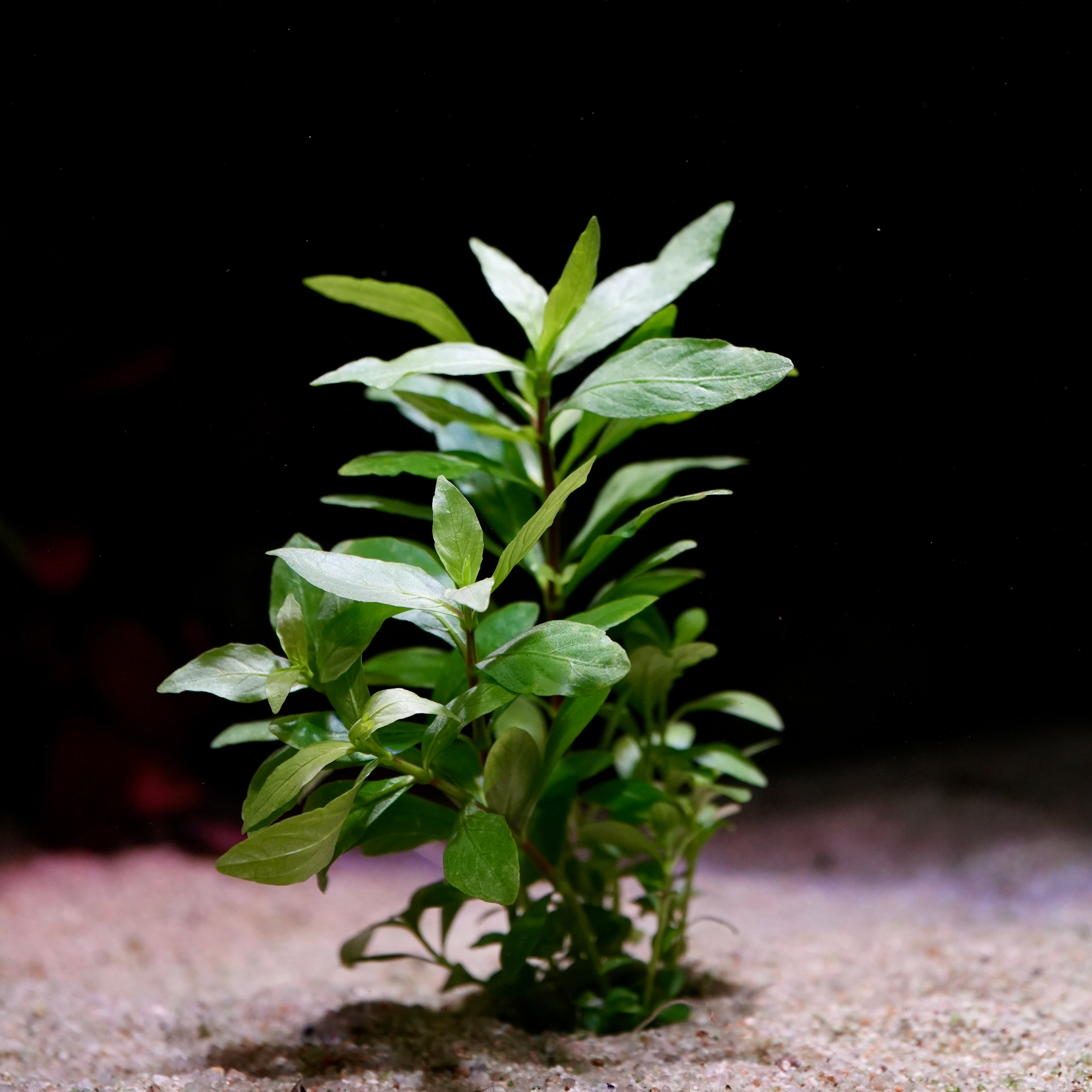
Hygrophila is one of the easiest and most adaptable stem plant genera. These plants grow rapidly and tolerate a huge range of aquarium conditions.
They are often recommended for beginners and newly established aquariums.
Key Characteristics
- Extremely hardy
- Fast growth
- Easy propagation
- Wide range of leaf forms
Popular Species
- Hygrophila polysperma
- Hygrophila corymbosa
- Hygrophila pinnatifida
- Hygrophila difformis
Best Use
Beginner aquariums, nutrient control, and fast background coverage.
Final Thoughts
Stem plants are one of the most rewarding groups of aquarium plants to grow. They offer endless variety in colour, texture, and growth style while also helping maintain a healthy planted aquarium.
From hardy plants like Hygrophila to colourful species like Rotala and Alternanthera, there is a stem plant suitable for nearly every aquarium style and experience level.
Once basic trimming and nutrient management are understood, stem plants become one of the most powerful tools for creating vibrant, healthy, and dynamic aquascapes.